
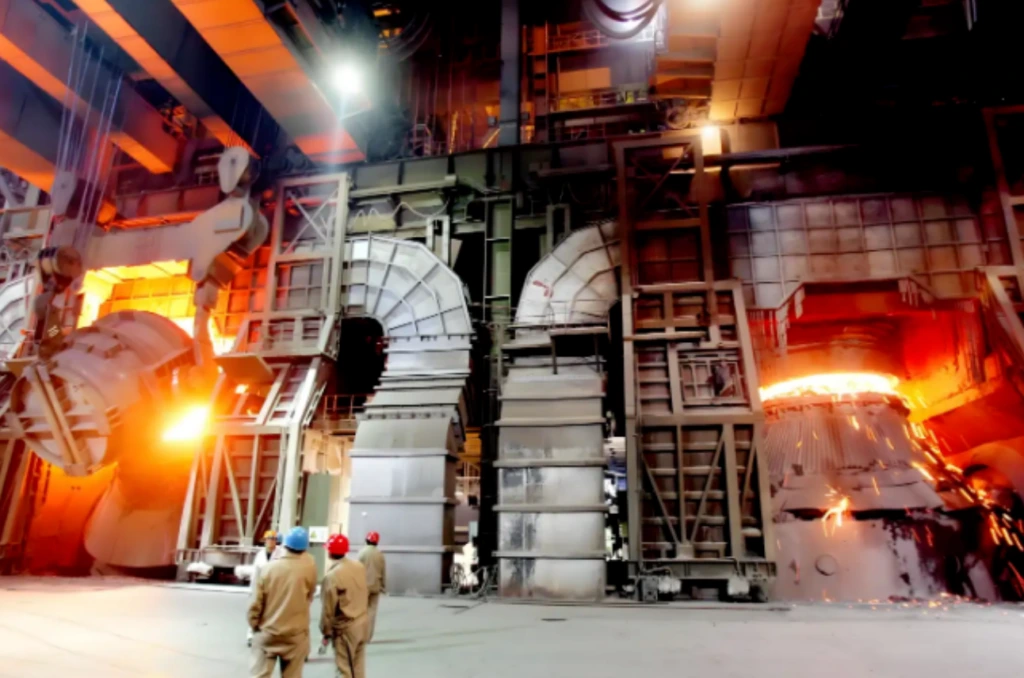
In the modern steel industry, understanding the different steelmaking processes is essential for anyone involved in metallurgy, manufacturing, or sustainable industrial development. This article breaks down the key differences between major primary steelmaking furnaces — Basic Oxygen Furnace (BOF), Electric Arc Furnace (EAF), and Open Hearth Furnace (OHF) — as well as critical secondary refining units like AOD, LF, and VD/VOD, helping you grasp how raw materials are transformed into high-quality steel.
Whether you’re a student, engineer, or sustainability officer, this guide provides clear insights into efficiency, cost, environmental impact, and application of each technology.
🔹 Primary Steelmaking Furnaces Comparison
| Comparison Dimension | Basic Oxygen Furnace (BOF) | Electric Arc Furnace (EAF) | Open Hearth Furnace (OHF) |
|---|---|---|---|
| Principle | Blows oxygen through molten iron to utilize physical heat and exothermic reactions (e.g., C, Si oxidation) to produce steel. | Uses graphite electrodes to generate electric arcs (up to 3000–4000°C) to melt scrap metal, followed by slagging and oxidation-reduction. | Burns coal or heavy oil in a regenerative furnace to use flame radiation to melt pig iron and scrap, refining via oxidation. |
| Main Raw Materials | Molten iron (~70–90%), with minor scrap (~10–30%). | Scrap steel (up to 100%), optionally supplemented with direct reduced iron (DRI) or hot metal. | Pig iron (from blast furnace) and scrap steel; flexible ratio. |
| Heat/Energy Source | Physical heat from molten iron + chemical heat from impurity oxidation (self-heating); no external fuel needed. | Electrical energy (electric arc), ~500 kWh per ton of steel. | Combustion of coal or heavy oil; thermal efficiency only 20–25%. |
| Smelting Characteristics | Short cycle time (~15–40 min/heat), enables “energy-efficient steelmaking”. Ideal for continuous large-scale production. | Longer cycle (~55–90 min/heat), controllable atmosphere (e.g., reducing), precise temperature control. Suitable for multi-grade and small-batch production. | Very long cycle (~6–8 hours/heat), slow production rhythm, high energy consumption. |
| Key Advantages | 1. High efficiency and output: up to 350 tons per heat. 2. Low cost: lower investment and operating costs than OHF. 3. High purity: low impurities due to high-purity iron input. | 1. Flexible raw materials: uses scrap efficiently; recycles ~75% of scrap. 2. High product quality: produces alloy steels, stainless steels, specialty grades. 3. Short construction period and lower capital cost. | 1. Strong material adaptability: can process large amounts of scrap and high-phosphorus iron. 2. Historically dominant: accounted for 85% of global steel in 1950s. |
| Main Disadvantages | 1. Relies on molten iron → requires integrated blast furnace setup. 2. Lower temperature (~2000°C): not suitable for melting refractory elements. 3. Poor flexibility: large-scale unit unsuitable for small batches. | 1. High energy demand: dependent on electricity grid. 2. Quality affected by scrap: impurities may enter steel. 3. Higher cost: EAF cost per ton was ~20% higher than BOF in 2024. | 1. Low efficiency: long smelting time, poor thermal efficiency. 2. High investment and operation cost: 1.4–1.7× that of BOF at same capacity. 3. Poor environmental performance: emissions and pollution don’t meet modern standards. |
| Primary Applications | Mass production of carbon steel, low-alloy steel. Dominant method globally (~70% of total steel output). | High-grade steel, alloy steel, stainless steel, special steels. Common in regions with abundant scrap and power supply. | Used historically for various steel types; now limited to rare cases (e.g., special castings). Mostly phased out. |
| Current Status / Trend | Still dominant; evolving toward large-scale, intelligent, composite blowing (bottom blowing) systems. Core of long-process steelmaking. | Rapidly growing due to low-carbon advantage (scrap recycling). Moving toward high-power, large-capacity, ultra-short process models. | Phased out: replaced since 1960s by basic oxygen furnaces. Most existing units have been decommissioned or converted. |
🔹 Secondary Refining Equipment: Enhancing Steel Quality
While primary furnaces produce crude steel, secondary refining technologies refine it further to achieve high purity, specific chemistry, and desired properties.
| Furnace Type | Core Function & Features | Main Refining Purpose |
|---|---|---|
| AOD Furnace (Argon-Oxygen Decarburization) | Blows argon-oxygen gas mixture into molten steel under low oxygen conditions to reduce chromium oxidation loss. Key equipment for stainless steel production. | Decarburization while preserving chromium → Economical production of stainless steel. |
| LF Furnace (Ladle Furnace) | Uses electric arc heating + slag forming for temperature adjustment, precise alloying, and desulfurization. Acts as a “pace-maker” in production rhythm. | Heating, alloying, desulfurization → Improves steel cleanliness and uniformity. |
| VD/VOD Furnace (Vacuum Degassing / Vacuum Oxygen Decarburization) | Places the ladle in a vacuum chamber to remove hydrogen and nitrogen effectively. VOD includes oxygen blowing for decarburization. Also used for stainless steel. | Vacuum degassing (dehydrogenation, denitrogenation) → Prevents porosity and cracking. Critical for high-purity steel. |
🔹 Modern Steel Production Flows
✅ High-Quality Carbon Steel Flow
1Blast Furnace Iron → BOF (Primary Melting) → LF (Heating & Alloying) → VD (Vacuum Degassing) → Continuous Casting✅ Stainless Steel Flow
1Scrap / Alloy → EAF (Melting) → AOD (Decarburization & Chromium Retention) → LF (Composition Adjustment) → Continuous Casting✅ Short-Process Special Steel (e.g., Alloy Steels)
1Scrap → EAF (Melting) → LF (Refining) → (Optional: VD for Ultra-Clean Steel) → Continuous Casting🔍 Key Takeaways
- Raw Material & Energy Define the Process
- BOF: Dependent on molten iron, uses chemical heat.
- EAF: Based on scrap, powered by electricity.
- OHF: Historical method using fossil fuels and mixed charge.
- Efficiency & Cost Trade-offs
- BOF: Most efficient and lowest cost for mass production.
- EAF: More flexible and eco-friendly but higher electricity costs.
- OHF: Outdated due to inefficiency and high emissions.
- Environmental Impact Matters
- EAF has significantly lower CO₂ emissions compared to BOF, making it central to green steel initiatives.
- Short-process routes (EAF + refining) align better with circular economy goals.
- Integrated Systems Are the Future
- Modern steel plants often combine:
- BOF for bulk carbon steel,
- EAF for specialty and recycled steel,
- Secondary refining (LF, VD, AOD) for final quality control.
- Modern steel plants often combine:
🌱 Sustainable Steelmaking: The Shift Toward EAF & Green Tech
As global demand for low-carbon steel grows, the EAF route is gaining momentum. With rising scrap availability and renewable electricity integration, electric arc furnaces are becoming the backbone of sustainable steel production.
Meanwhile, BOF remains dominant in integrated mills but is being upgraded with hydrogen injection, oxygen enrichment, and digital automation to improve efficiency and reduce emissions.
The future lies in hybrid systems where primary furnaces work seamlessly with advanced secondary refining to deliver both volume and precision.
💡 Conclusion
Understanding the roles of BOF, EAF, OHF, AOD, LF, and VD helps clarify how steel evolves from raw material to finished product. While BOF dominates today’s market, EAF is leading the green transition. And secondary refining units ensure that even base steel can be transformed into high-performance alloys.
For engineers, investors, and policymakers, choosing the right combination of technologies depends on raw material access, energy cost, product mix, and environmental targets.