
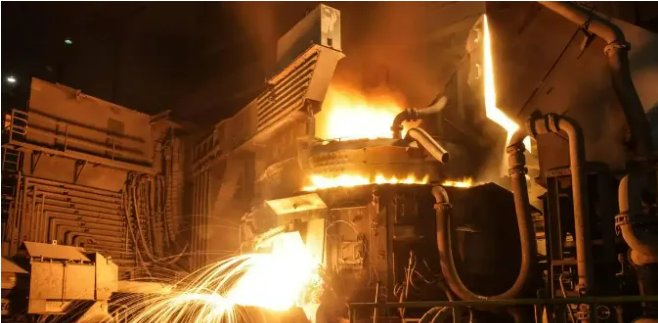
Electric Arc Furnace (EAF) steelmaking is a process that uses the high temperature generated by electric arcs to melt scrap steel and other raw materials for steel production. Its core principle lies in generating intense arcs between the electrodes and the charge, releasing enormous heat that rapidly melts the charge and reaches the temperature required for steelmaking.
- Arc Generation
In an EAF, three graphite electrodes are typically inserted vertically into the furnace. When the electrodes contact the charge (primarily scrap steel) and are then withdrawn slightly, an electric arc is struck between them. The arc temperature is extremely high, reaching several thousand degrees Celsius — sufficient to melt any metal.
- Heat Transfer
The high temperature generated by the arc is transferred to the charge through three mechanisms: radiation, convection, and conduction.
Radiation is the primary mode of heat transfer — the intense light and heat emitted by the arc directly irradiate the charge, causing rapid temperature rise.
Convection and conduction transfer heat through the furnace atmosphere and molten slag, ensuring uniform heating of the charge.
- Charge Melting
Under the intense heat, the charge begins to melt, forming molten steel (bath). As melting proceeds:
Impurities and gases in the steel gradually rise to the surface and are absorbed by the slag or expelled from the furnace.
Alloying elements may be added as required to adjust the chemical composition of the molten steel.
- Refining Process
EAF steelmaking involves not only melting but also a refining stage. In the later stages of melting, by adjusting arc power, slag composition, and oxygen blowing operations, the following objectives are achieved:
Removal of harmful elements such as sulfur (S) and phosphorus (P)
Fine-tuning of the chemical composition and temperature of the molten steel to meet specifications for different steel grades
- Tapping and Casting
Once the molten steel has reached the specified composition and temperature, the tapping operation is carried out. The molten steel is poured from the EAF into a ladle or tundish, then transported to the casting shop for casting into finished shapes.