
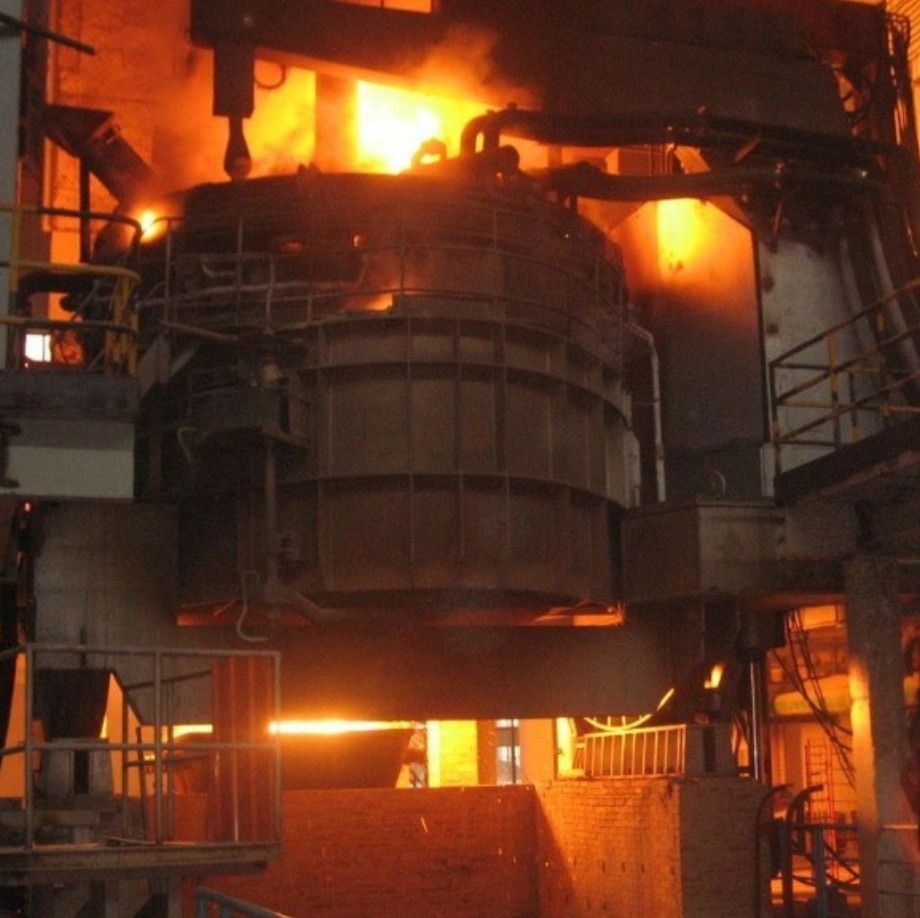
In VOD refining furnaces, precisely controlling the carbon content of molten steel to extremely low levels (e.g., below 0.03%) is crucial. Laser gas analyzers and exhaust gas flow meters constitute the "eyes" and "yardsticks" for real-time monitoring of the smelting process.
How Laser Gas Analyzers Work
The core technology of laser gas analyzers is Tunable Diode Laser Absorption Spectroscopy (TDLAS).
- Principle: Each gas molecule (e.g., CO, CO₂, O₂) has its unique, fingerprint-like characteristic absorption spectral lines. The tunable semiconductor laser within the analyzer emits a narrow-band laser beam of a specific wavelength, which passes through the exhaust gas sample extracted from a vacuum pipe. As the laser passes through, only gas molecules matching the laser wavelength absorb the light energy, causing the laser intensity to attenuate.
- Concentration Calculation: This attenuation relationship follows the Lambert-Beer Law, meaning the amount of laser intensity attenuation is directly proportional to the concentration of the target gas. By precisely measuring the attenuation rate, the analyzer can calculate the volumetric concentration percentages of CO, CO₂, and O₂ in the exhaust gas in real time. This technology, due to its high selectivity and sensitivity, enables rapid and accurate measurements.
- Technical Advantages: Compared to traditional electrochemical or infrared sensors, TDLAS technology is virtually unaffected by background gas cross-interference, has an extremely fast response time (1-2 seconds), and requires minimal maintenance, making it ideal for the harsh operating conditions of VOD furnaces with high temperatures and high dust levels.
How Exhaust Gas Flow Meters Work
Exhaust gas flow meters typically employ the principles of vortex flow meters or differential pressure flow meters (such as Pitot tubes).
- Principle: Taking a vortex flow meter as an example, it places a vortex generator (resistive fluid) in the flow field. When exhaust gas flows through, regular vortices (Karman vortex streets) are alternately generated on both sides of the generator. The frequency of vortex generation is proportional to the exhaust gas velocity. By detecting this frequency, the instantaneous volumetric flow rate of the exhaust gas can be calculated.
- Data Integration: Real-time volumetric flow rate (m³/s) provided by the flow meter is crucial information. A single concentration percentage cannot reflect the total amount of pollutants emitted; it must be combined with flow rate data for accurate process judgment.
Collaborative Operation and Endpoint Judgment
The combination of the laser analyzer and flow meter represents a leap from "concentration monitoring" to "precise measurement and control."
- Key Calculations:
- Instantaneous Decarburization Rate: The control system multiplies the CO and CO₂ concentrations measured by the laser analyzer with the exhaust gas flow rate measured by the flow meter in real time to calculate the mass of carbon removed from the molten steel per second, i.e., the instantaneous decarburization rate.
- Cumulative Decarburization: By integrating the decarburization rate over time, the total amount of carbon removed since the start of blowing can be accurately calculated. Combined with the known weight of the molten steel and the initial carbon content, the system can back-calculate and display the estimated instantaneous carbon content in the molten steel in real time.
2.Endpoint Judgment Signals:
- Decarburization Rate Curve: In the later stages of blowing, when the carbon content of the molten steel drops to a very low level, carbon mass transfer becomes the limiting factor, and the decarburization rate exhibits a significant non-linear decreasing trend. This is an important quantitative indicator for judging the approach of the endpoint.
- Gas Concentration Trend: As shown in the flow chart, when the intense carbon-oxygen reaction weakens, the CO concentration in the exhaust gas will decrease from its peak, while the remaining oxygen will cause the O₂ concentration to rise from its low level. By monitoring these trend changes and combining them with model predictions, operators can make the decision to "stop oxygen in advance."
Summary
In conclusion, the application of a laser gas analyzer combined with an exhaust gas flow meter in a VOD refining furnace provides unprecedentedly accurate data support for endpoint judgment by "weighing" carbon in real time and quantitatively. This system is a core technological guarantee for achieving stable and efficient production of ultra-low carbon stainless steel.