Description
YBF Prefabricated Substation
Outdoor package substation for plant and green power
Overview
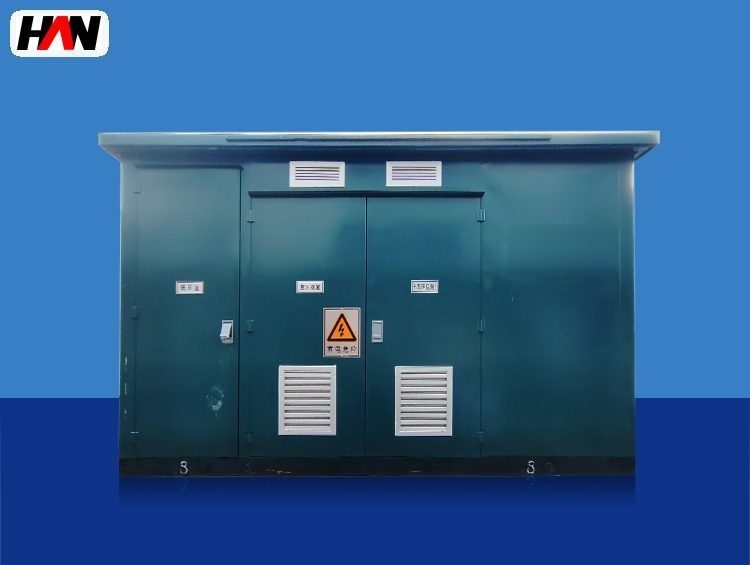
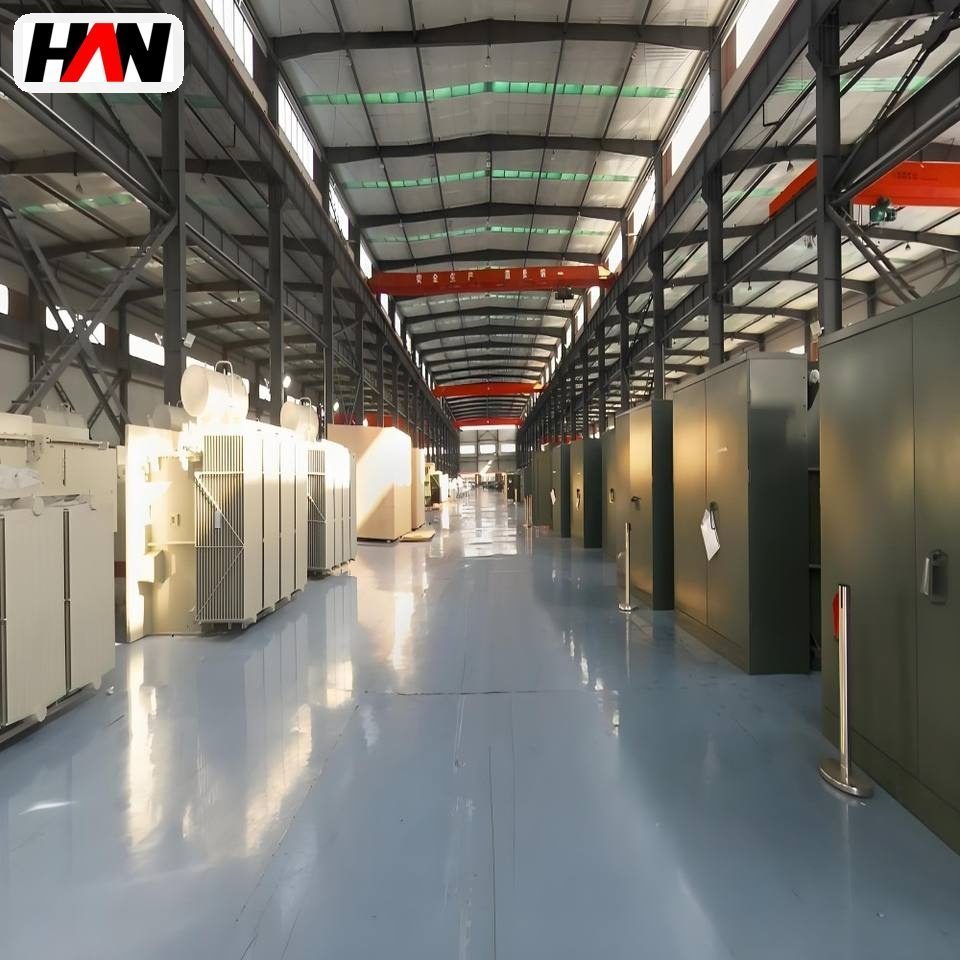
A YBF prefabricated substation is an outdoor package unit that combines a medium-voltage ring main unit, a distribution transformer and a low-voltage distribution board inside one weatherproof enclosure. It is built as a complete assembly in the workshop, delivered to site as a single transport unit and set on a simple foundation. HANI Metallurgy supplies the range for 12 kV, 24 kV and 40.5 kV systems with transformers up to 2500 kVA, with enclosure protection from IP33 to IP54, type-tested to IEC 62271-202.
The format is used wherever a plant needs a distribution point outdoors without building a room for it. Inside a steel works it serves the second level of distribution below the main step-down substation: the oxygen plant, the water treatment station, the limestone and alloy storage area, the workshop cluster at the far end of the site, and the construction power for a new bay. The same unit is used to connect generation to the plant network, whether that generation is waste-heat recovery from the furnace off-gas, or a photovoltaic array on the roof of a warehouse. In both cases the electrical requirements are similar: a compact transformer, a switch-disconnector with earthing, low-voltage distribution, and metering that the utility will accept.
Technical Parameters
| Parameter | Unit | 12 kV | 24 kV | 40.5 kV |
|---|---|---|---|---|
| Rated high voltage | kV | 12 | 24 | 40.5 |
| Transformer capacity | kVA | 630 – 2500 | 630 – 2500 | 630 – 2500 |
| Low-voltage output | V | 400 | 400 | 400 |
| High-voltage switching | — | ring main unit | ring main unit | ring main unit / cubicle |
| Protection degree | IP | IP33 – IP54 | ||
| Enclosure | — | colored steel or embossed metal panel on steel frame | ||
| Transformer cooling | — | ONAN | ONAN / ONAF | ONAN / ONAF |
| Room ventilation | — | louver with insect screen, optional thermostat fan | ||
| Metering | — | separate metering compartment, sealable | ||
| Earthing | — | earth bar in each room, HV earthing switch, frame bonding | ||
| Design standard | — | IEC 62271-202, IEC 61439 | ||
Typical values for reference. Final voltage class, capacity, protection degree and enclosure finish are confirmed on the outline drawing and the approved project datasheet.
How It Works Under Furnace Duty
The unit is divided into three rooms along its length: high voltage, transformer, low voltage. The high-voltage room holds the ring main unit, which gives the substation two cable ways in and two out, so the enclosure can be inserted into a ring without a separate switching point. The transformer room is ventilated through louvers at the bottom and at the top, with the transformer positioned so that the rising air passes the tank and the radiators. The low-voltage room holds the distribution board and the outgoing feeder terminals, usually with the cables leaving downward into a trench.
In a melt shop the ambient is the hard part. The enclosure stands in a yard where summer air is hot, the sun loads the roof, and the dust from scrap handling and from the dedusting stacks settles on every horizontal surface. Two things follow. The transformer is selected for the ambient that the site actually has after allowing for the temperature rise inside the enclosure, not for the standard reference ambient, and the louver area is sized for that heat load with a filter that can be removed from outside. A unit that is specified only by transformer capacity will run hot in July and will be blamed on the transformer rather than on the ventilation.
When the unit connects generation rather than a load, the design changes at the point of connection. The high-voltage side needs a visible break and an earthing switch for safe isolation of the incoming cable, the protection has to include the functions that the utility requires for a grid connection — over and under voltage, over and under frequency, and loss-of-mains detection — and the metering has to be in a compartment that the utility can seal. Inside a plant with an arc furnace on the same busbar, the voltage quality is poor, so the settings of those protection functions have to be coordinated with the furnace duty, otherwise the generator trips on every bore-in.
Engineering notes
1. A package substation is a box in the sun; roof colour and a ventilated air gap under the roof change the internal temperature more than an extra louver does.
2. Seal the metering compartment and no other: a utility seal on a door that the plant must open for operation ends up cut and never replaced.
3. Bring the earthing connection to a single point on the frame and take the frame to the plant grid with a conductor sized for the prospective fault current.
Key Advantages
- Ring-ready high-voltage room: a ring main unit with two incoming and two outgoing ways lets the unit sit inside a plant ring so that one faulted section can be isolated without dropping the rest of the line.
- One unit, one lift: transformer, high-voltage switchgear and low-voltage board arrive assembled and tested, so site work is a foundation, a cable termination and a set of commissioning tests.
- Enclosure built for weather: a steel frame with colored steel or embossed metal panels, a drained roof and louver screens that keep rain and insects out while the rooms breathe.
- Grid-tie ready: a sealable metering compartment, a visible break and an earthing switch on the incoming way give the utility what it needs to accept a generator or a photovoltaic feeder.
- Placement without a building: the unit stands on a slab at the load, which removes the cable run back to a central electrical house and the civil works that would go with it.
Selection and Commissioning
- Decide load or generation first. A unit that feeds a load and a unit that accepts generation have different protection, metering and isolation requirements at the incoming way.
- Set the ambient before the capacity. Take the site summer temperature, add the rise inside the enclosure, and select the transformer and the louver area against that figure.
- Choose the enclosure finish for the atmosphere. Standard coated steel for an inland yard; a heavier coating system or a stainless option where the unit stands near a pickling line or a coastal boundary.
- Agree the cable ways. The number and size of incoming and outgoing cables decides the trench width, the gland plate openings and the bending radius inside the low-voltage room.
- Coordinate grid protection with the utility. Obtain the required protection functions and settings before the relay is configured; retrofitting a loss-of-mains function after approval is a re-approval.
- Commission with a load and a heat check. Run the unit at working load, log the room temperatures, verify the fan control and confirm that the earthing and the door interlocks operate as designed.
Frequently Asked Questions
Q1: What protection is needed to connect generation to the plant network?
A: At minimum over and under voltage, over and under frequency, and loss-of-mains detection, plus a visible break and an earthing switch for safe isolation. The exact list is set by the utility that owns the connection point, so it is agreed before the relay is configured rather than after.
Q2: How long does the enclosure last?
A: Service life is governed by the coating system and by the atmosphere, not by the electrical equipment. A coated steel enclosure in a dry inland yard and the same enclosure beside a pickling line are two different cases, which is why the finish is selected for the site and inspected at each maintenance interval.
Q3: Can a dry-type transformer be installed inside?
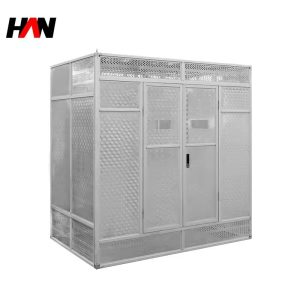
A: Yes, and it removes the oil fire load from the enclosure. The ventilation requirement is then higher, because a dry-type unit rejects its heat to the room air rather than to a tank and radiators, so the louver area and the fan control are designed for that case.
Q4: How much space does one unit need?
A: The footprint follows the transformer rating and the number of low-voltage ways, and it is always larger than the enclosure itself. Allow for the door swing, the cable trench, the earthing conductor and the clearance that a crane or a forklift needs to set the unit down.
One Package, One Connection Point
Send the supply voltage, the load or generation capacity, the site ambient and the cable route, and HANI Metallurgy will return a room arrangement, an enclosure specification and a protection list for your yard.