
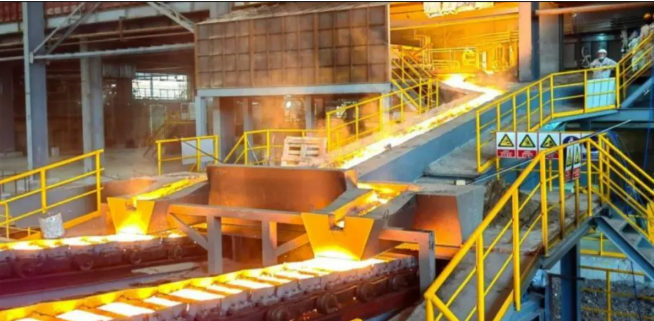
During the steelmaking process, certain critical components of the Electric Arc Furnace (EAF) are exposed to extreme high-temperature conditions. Without effective cooling, these components—which are in direct contact with high-temperature zones—would rapidly deteriorate, compromising equipment safety and production continuity. The cooling system is therefore essential for stable EAF operation.
The primary EAF components requiring cooling are as follows:
1. Electrodes
- Operating temperature: As the direct medium for arc discharge, electrode tip temperatures can exceed 3,000°C.
- Cooling method: Forced cooling via water-cooled copper sleeves/clamps.
- Purpose: Prevents electrode melting, oxidation, or deformation; ensures stable arc discharge; extends electrode service life and reduces consumption (industry average: approx. 2.1 kg/t steel).
2. Furnace Shell Sidewalls
- Operating temperature: Direct contact with molten steel and slag at temperatures exceeding 1,600°C.
- Cooling method: Modern EAFs commonly use water-cooled panels or spray cooling systems.
- Purpose: Prevents shell overheating, distortion, or burn-through; promotes slag coating (freeze-lining) on the inner wall to protect refractory lining; improves thermal efficiency by reducing heat loss.
3. Furnace Roof (Cover)
- Operating temperature: Subject to intense arc radiation and high-temperature off‑gas at approx. 1,200°C.
- Cooling method: Typically designed as a water-cooled steel structure with internal water circulation passages.
- Purpose: Extends roof service life; reduces thermal radiation impact on the operating environment; maintains structural rigidity and sealing integrity against high-temperature deformation.
4. Electrode Holders and Sealing Rings
- Operating temperature: In close proximity to the electrodes, subject to extreme heat conduction.
- Cooling method: Water‑cooled design.
- Purpose: Electrode holders – ensures firm clamping and good electrical contact to prevent localized heating from excessive contact resistance. Sealing rings – maintains seal between electrodes and roof, prevents air ingress into the furnace (which would affect steel quality) and prevents high‑temperature off‑gas leakage.
5. Door Frames, Roof Rings, and Other Peripheral Structures
- Operating temperature: Subject to high thermal radiation and off‑gas impingement.
- Cooling method: Water‑cooled design.
- Purpose: Maintains overall structural stability and rigidity; reduces distortion‑induced loss of precision; extends service life and reduces maintenance costs.