
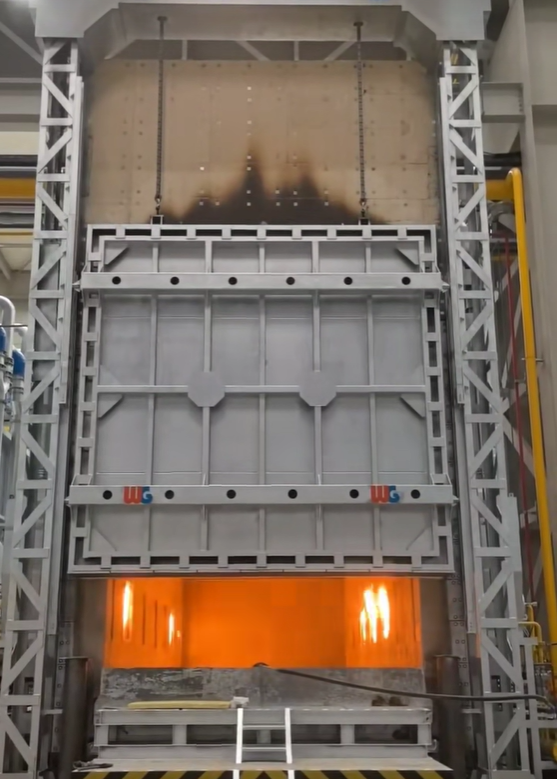
Over the next decade, China's Electric Arc Furnace (EAF) industry is expected to follow three core development trends: greenization, intelligentization, and large-scale capacity expansion. The share of EAF-based steel production is projected to rise from the current level of approximately 10% to around 25% by 2030, with the equipment market size potentially exceeding RMB 90 billion. This transition is positioned as a critical pathway for China's steel industry to achieve its "dual carbon" goals (carbon peaking and carbon neutrality).
I. Policy-Driven Capacity Expansion and Structural Optimization
1. Steady Increase in EAF Steel Share
Driven by the "dual carbon" objectives, the share of EAF steel production in China is expected to increase steadily. It is projected to reach 15%–20% by 2025 and further rise to approximately 25% by 2030.
2. Continued Optimization of Regional Layout
- East China will maintain its leading position, leveraging flagship enterprises such as Baowu Group and Shagang Group to form industrial clusters. In 2023, the region accounted for 42.7% of the national EAF capacity.
- South China is benefiting from infrastructure demand driven by the Guangdong–Hong Kong–Macao Greater Bay Area, with EAF equipment procurement in the region growing by 23.6% year-on-year.
- Southwest China, endowed with abundant hydropower resources and relatively low electricity costs, is expected to see rapid growth in EAF capacity.
3. Apparent Trend Toward Large-Scale EAFs
EAF capacity is gradually upgrading from the earlier sub-50‑tonne range to the 150‑ to 300‑tonne class, with some large steel enterprises even adopting 400‑tonne EAFs. Large-capacity EAFs not only increase single-furnace output but also reduce unit capacity investment and energy consumption, making them well-suited to meet the demand for high-volume steel products from industries such as automotive and shipbuilding.
II. Technological Innovation Driving High-Quality Industry Development
- Deep Application of Intelligent Technologies
AI-based furnace condition prediction systems have reduced the tap-to-tap cycle to within 45 minutes, achieving annual cost savings of over RMB 12 million per furnace.
The penetration rate of digital twin technology is expected to cover 80% of EAF capacity by 2030.
By combining mechanistic models with data-driven intelligent algorithms, full-process intelligent control has been realized for the entire route: "continuous scrap charging EAF – refining – continuous casting – direct rolling."
- Breakthroughs in Green and Low-Carbon Technologies
Horizontal continuous scrap charging with efficient preheating, combined with the "three-stage" ultra-low dioxin emission technology, has reduced dioxin emissions to just 1/59 of the standard limit.
Elevated scrap preheating temperatures effectively avoid the "steel iceberg" effect and improve melting efficiency.
Green power integration requirements (25.2%–70%) will drive deeper synergy between EAF operations and renewable energy sources.
- Energy Efficiency Improvement and Cost Optimization
Optimization efforts target electrode consumption (current industry average: 2.1 kg/t steel), waste heat recovery efficiency (target: >85%), and specific power consumption (target: <320 kWh/t).
Next-generation technologies such as the quantum EAF, which improves thermal efficiency by 15%, are expected to accelerate adoption.
To maintain cost competitiveness, the share of green electricity must reach 60%.
III. Market Landscape Evolution and Challenge Response
- Rising Industry Concentration
The industry CR10 concentration ratio is expected to increase from 58% in 2022 to 67% by 2025.
Large steel enterprises, leveraging their capital and technological advantages, will expand market share through mergers and acquisitions, while smaller mills will accelerate their exit due to mounting carbon compliance costs.
- Collaborative Industry Chain Development
Upstream – scrap steel resources: China's annual scrap supply is expected to exceed 300 million tonnes by 2025, with the scrap ratio rising to above 30%.
Downstream – specialty steel demand: Emerging industries such as new energy vehicles, wind power, and photovoltaics are driving annual growth of over 15% in demand for specialty steels, including high-strength steel and silicon steel.
- Key Challenges and Countermeasures
Scrap price volatility: In 2023, the price amplitude reached 28%, underscoring the need to improve the scrap resource recycling system.
Electricity cost pressure: The stability of green power supply affects cost competitiveness.
Technology security risks: The localization rate of intelligent control systems remains insufficient.
Alternative technology threats: The development of hydrogen-based metallurgy could reshape the process substitution pathway.
IV. Future Outlook
Over the next decade, EAF steelmaking will transition from the traditional "high-carbon, high-energy" model to a "green, intelligent, and efficient" modern paradigm, establishing itself as the core pathway for China's steel industry to achieve its "dual carbon" goals. With ongoing technological advances and policy support, EAF steelmaking will not only achieve environmental performance comparable to or better than that of traditional blast furnace ironmaking but will also, through full-process equipment localization, break the long-standing foreign monopoly on key equipment for hundred-tonne-class large EAFs. By 2030, China is expected to establish a world-leading EAF short-process steelmaking system, offering a "China solution" for the global steel industry's green transition.