
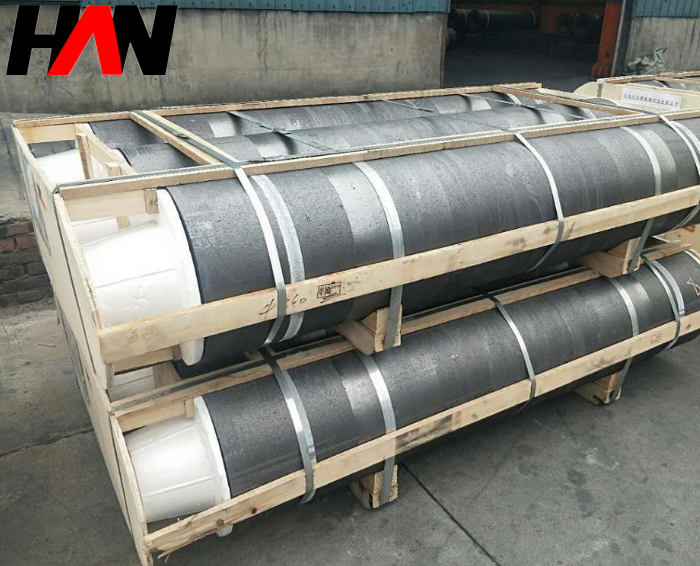
The primary advantage of the conical nipple design is that the longitudinal cross-section of the electrode socket wall is tapered—thinner at the outer edge and thicker toward the interior. This structure offers high overall strength and resistance to bursting or cracking; additionally, the nipple features a larger diameter at its center, making it less prone to breakage.
The following points should be observed regarding the use of graphite electrodes:
(1) When selecting the electrode type and diameter, consider the electric furnace capacity and the rating of the installed transformer.
(2) Handle graphite electrodes with care during loading, unloading, and transport; protect the threads and strictly prevent impact damage.
(3) Protect graphite electrodes from moisture during transport and storage; if exposed to moisture, they must be dried before use.
(4) Before connection, use compressed air to blow dust out of the electrode socket threads, then screw the nipple and electrode tightly together, ensuring the tightening torque meets specifications. To ensure the required torque is achieved across different electrode sizes, some electric furnace steel plants use specialized tightening wrenches equipped with torque indicators to guarantee correct operation. The electrode holder should grip the electrode either above or below the bottom of the socket.
(5) The electrode lifting mechanism must operate responsively and without swaying during use to prevent electrode breakage or the loosening and detachment of the nipple.
(6) When charging the furnace, place large pieces of material at the bottom to prevent collapsing material from striking and breaking the electrode during the melting process.
(7) During the refining stage, do not immerse the electrode in the molten steel for carburization; doing so causes the electrode to thin, potentially leading to breakage or nipple detachment.
(8) To prevent the electrode nipple from loosening or detaching, the use of a locking pin is recommended.