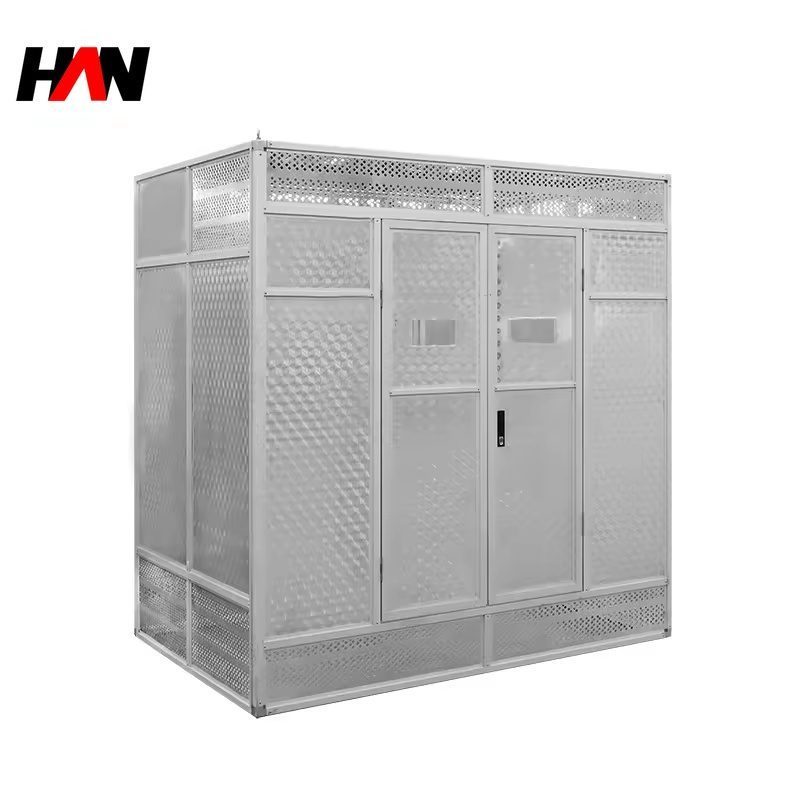
Description
Class H Open-Wound Dry-Type Transformer
High-temperature duty for dusty furnace areas
Overview
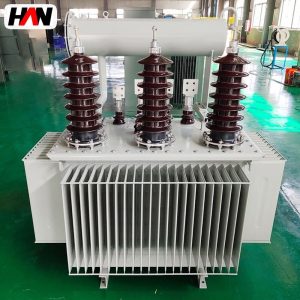
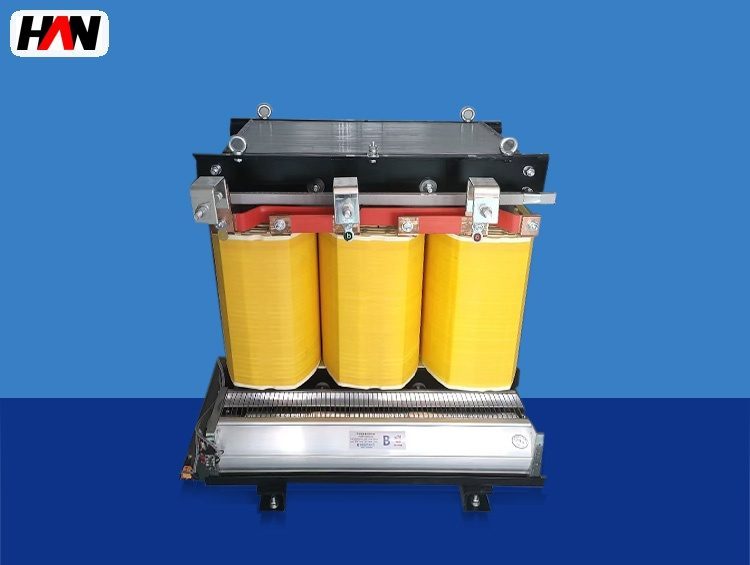
A Class H open-wound dry-type transformer is an air-cooled distribution transformer whose windings are insulated with a Class H (180) system and left open to the air instead of being sealed inside an epoxy casting. It takes 10 kV or 20 kV from the plant ring main and delivers 400 V to the loads that keep a melt shop alive: damper actuators, dedusting fan motors, hydraulic power units, charging crane drives, cooling water pumps and local lighting boards. Because the unit contains no oil and no solid resin block around the coil, it tolerates high ambient temperature, radiant heat from the furnace shell and short overloads better than a cast resin unit of the same rating. That is why the type is common on furnace platforms and in scrap yards.
In the electrical single line the transformer sits downstream of the medium-voltage feeder and upstream of a local distribution board, so its failure stops one group of auxiliaries rather than the whole shop. Compared with an oil-immersed unit it removes the fire load from a building that already handles molten metal, and compared with a cast resin unit it removes the casting that would otherwise have to be derated in a hot, dusty room. HANI Metallurgy supplies these units for continuous casting auxiliary rooms and for furnace area distribution, in ratings from 100 kVA to 2500 kVA and in voltage classes 10 kV and 20 kV.
Technical Parameters
| Parameter | Unit | 315 kVA | 800 kVA | 1600 kVA |
|---|---|---|---|---|
| Rated capacity | kVA | 315 | 800 | 1600 |
| Primary voltage | kV | 10 | 10 | 10 |
| Secondary voltage | V | 400 | 400 | 400 |
| Impedance voltage | % | 6 | 6 | 6 |
| Insulation class | — | H (180) | H (180) | H (180) |
| Temperature rise | K | 125 | 150 | 180 |
| Cooling | — | AN | AN | AN / AF |
| Protection | — | IP20 | IP20 | IP23 |
| Efficiency at full load | % | ≥ 98.4 | ≥ 98.7 | ≥ 99.0 |
| Design standard | — | IEC 60076-11 | ||
Typical values for reference. Final ratings, temperature rise and protection degree are confirmed on the nameplate and the approved project datasheet.
How It Works Under Furnace Duty
Heat leaves an open-wound transformer by two paths only: conduction along the copper to the surface, and convection from that surface into the surrounding air. Because the coil is not encapsulated, air reaches the conductor insulation directly across the full surface of every disc, and the ducts between winding sections stay open. A Class H insulation system is rated to work with a hot-spot temperature well above that of a Class F system, which is what allows a temperature rise of 125 K to 180 K instead of the 100 K that governs most cast resin units. In a room that sits at 45 to 50 degrees Celsius for most of the year, that extra margin is not a marketing figure, it is the difference between a unit that runs at rated capacity and one that has to be derated.
The windings are impregnated under vacuum and pressure. The vacuum pulls air and moisture out of the paper and the conductor bundle, then the varnish is forced in at pressure and cured. The result is a coil that is mechanically locked, resistant to conductive dust bridging between turns and able to shed the vibration of a nearby dedusting fan. The process matters more than the class letter: a label alone will not survive a dusty room.
The trade-off is moisture. An open winding has no sealed barrier, so in a humid climate or during a long shutdown the insulation surface can collect condensation. That is why the type is normally installed indoors, in a room with a dry air supply or with anti-condensation heaters wired to the transformer terminal box, and why the enclosure is fitted with a removable mesh that can be cleaned without opening the live compartment. In a melt shop the air is hot and dry near the furnace but wet near the water treatment plant, so the same transformer family is applied with different enclosures in the two places.
Engineering notes
1. A 150 K rise unit is not interchangeable with a 100 K rise unit on the same feeder; the protection thermal image and the cable rating both change.
2. In metal-dust areas the intake must be IP23 or better with a washable mesh, and the mesh cleaning interval belongs in the maintenance plan.
3. Airflow is the rating. A unit pushed into a corner with less than the specified clearance will run hotter than its test report.
Key Advantages
- High-temperature capability: the Class H system with a 125 K to 180 K rise keeps rated output in a furnace area room where a standard dry-type unit would already be derated.
- Short-time overload reserve: the thermal mass of an open coil and the higher permitted hot-spot temperature allow a short overload during a fan start or a crane hoist without tripping the winding alarm.
- Vacuum pressure impregnation: the coil is impregnated under vacuum and cured under pressure, so it resists conductive dust and vibration instead of relying on a surface coating.
- No oil, no fire load: the unit can be installed inside the melt shop building, close to the load, without an oil pit, a fire wall or a separate oil-immersed compartment.
- Serviceable in place: the mesh guard and the coil are visible and accessible, so a visual inspection and a dust purge do not require the transformer to be removed from the room.
Selection and Commissioning
- Fix the ambient temperature first. Name the highest sustained room temperature and the radiant heat from nearby equipment; the rating follows from those two numbers, not from the load list.
- Choose the rise deliberately. A 125 K unit is quieter and lasts longer, a 180 K unit is smaller and cheaper for the same kVA. Do not mix the two on one feeder without revisiting protection settings.
- Specify the enclosure with the room. IP20 for a clean electrical room, IP23 where dust or dripping water is present, with a washable mesh and an access door sized for coil inspection.
- Reserve the airflow path. Keep the clearances on the datasheet, keep the intake low and the outlet high, and do not place the unit where a hot air pocket can form under the roof.
- Wire the thermal protection. Winding sensors, the fan contactor if AF cooling is used and the anti-condensation heater must all report to the plant control system, not only to a local lamp.
- Commission with a load run. Log coil temperature through a full production shift at rated load; a reading that is still climbing after two hours points to airflow, not to the sensor.
Frequently Asked Questions
Q1: What is the difference between Class H and Class F insulation?
A: The class defines the temperature the insulation system is designed to survive. Class F is rated to 155 and normally applied with a 100 K rise, Class H is rated to 180 and can be applied with a rise of 125 K or more. In a hot room the H class unit keeps its rating where the F class unit has to be derated; in a cool, clean room the F class unit is usually the cheaper choice.
Q2: Is an open-wound transformer sensitive to moisture?
A: Yes, more than a cast resin unit, because there is no sealed barrier over the winding. It is an indoor product. Where humidity is high or the room is shut down for long periods, fit anti-condensation heaters, keep the enclosure closed and check insulation resistance before energising after a long stop.
Q3: Does the protective mesh reduce cooling?
A: A clean mesh costs very little. A blocked one costs a great deal, because it cuts the convective path that the rating depends on. Specify a mesh with a generous free area, make it removable without tools, and put the cleaning interval in the maintenance schedule for dusty areas.
Q4: How much overload can it take?
A: The permitted overload is set by the rise class, the ambient temperature and the duration, and it is always short-time. A unit built for a 150 K rise has more headroom than one built for 125 K, but neither is a continuous rating. For a load that sits above nameplate every shift, size the transformer up.
Choose the Right Dry-Type Unit for a Hot Room
Send the room temperature, the load list and the dust conditions, and HANI Metallurgy will return a rating, a temperature rise class and an enclosure proposal for your furnace area.