
Introduction: On 15:03, January 18, 2026, a 650 m³ saturated steam spherical tank at the Steelmaking Department of Baotou Steel Plate Plant exploded, causing serious casualties. Taking this as a lesson, this article systematically presents the basic knowledge of steam accumulators, providing an objective and accurate technical reference for industry peers to better understand and use this important equipment safely and properly.
1. What is a Steam Accumulator?
A steam accumulator is a pressure vessel that stores thermal energy in the form of steam. It is mainly used in steam supply systems with large fluctuations in thermal load. Its core functions are to balance the steam supply, avoid large pressure fluctuations, and keep the boiler operating at a stable load.
Common classification methods:
- By volume: The volume can be customized according to actual needs. Common specifications include 100 m³, 150 m³, 200 m³, etc.
- By operating pressure:
- Variable-pressure accumulator: The operating pressure changes with the amount of stored heat. The typical example is the steam accumulator.
- Constant-pressure accumulator: The operating pressure is constant. The feedwater accumulator is a common type.
- By application: Suitable for steam supply systems with large load fluctuations, systems with high instantaneous steam demand, and systems where the steam source is intermittent or has large flow fluctuations.
- By structure: The steam accumulator is usually of horizontal design and connected in parallel with the boiler. The body is a cylindrical pressure vessel with external thermal insulation. Inside, there are main and branch steam pipes and steam nozzles, surrounded by a circulation cylinder. Externally, it is equipped with pressure gauges, water level indicators, automatic control valves, steam inlet/outlet, water inlet/outlet, drain, and manholes, etc.
2. Working Principle of a Steam Accumulator
The working principle of a steam accumulator can be understood as a process of "storing and releasing" thermal energy. The main equipment is generally a horizontal cylindrical vessel filled with softened water.
- Charging process: When the steam demand decreases, excess steam from the boiler is fed into the softened water through the charging device for storage. At this time, the water pressure and temperature inside the vessel rise, forming saturated water at a certain pressure.
- Discharging process: When the steam demand increases and the boiler supply is insufficient, the pressure inside the vessel drops. The previously saturated water becomes superheated water due to the pressure drop and flashes into steam, which is supplied to the users.
Through the above process, the accumulator achieves the storage and release of thermal energy, ensuring stable operation of the steam supply and consumption system, and allowing the boiler to operate efficiently at full load or a certain stable load.
Why is it efficient in storing heat? The water in the accumulator acts both as the heat exchange medium and the heat storage medium. At a given pressure, while the enthalpy per unit mass of steam is higher than that of water, the specific volume of water is much smaller. Therefore, the heat content of water per unit volume is far greater than that of steam. For example, at 0.78 MPa (absolute pressure), the heat content per cubic meter of saturated water is about 58.8 times that of saturated steam.
3. Structural Components of a Steam Accumulator
A complete steam accumulator system mainly includes the following parts:
- Steam inlet: Connects to the boiler or other heat source, equipped with a pressure control valve and temperature monitoring device.
- Steam-water separator: Located below the steam inlet, used to separate water droplets from the steam to ensure storage efficiency.
- Accumulator body: The pressure vessel that stores hot water and saturated steam.
- Steam distribution pipe: Ensures that the incoming steam is evenly distributed and fully contacts the heat storage medium.
- Steam release port: Releases the stored thermal energy when needed.
- Control system: Monitors and automatically adjusts the internal temperature, pressure, and steam flow rate in real time.
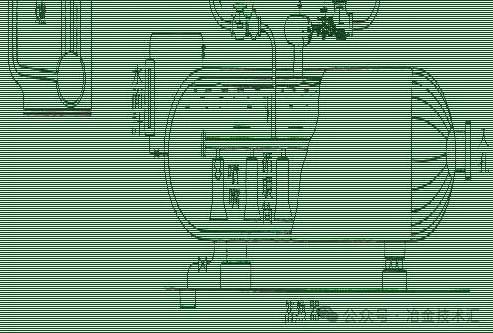
Steam heat storage devices used in the metallurgical industry
4. Selection Criteria for Steam Accumulators
In practical applications, the selection and use of a steam accumulator should consider the following conditions:
- Process equipment steam load: The steam load should have obvious fluctuations, with frequent and intense changes in the daily load curve. At the same time, the operating pressure of some users should be lower than that of the steam source (boiler or cogeneration plant). The low-pressure steam consumption should be greater than or equal to the difference between the maximum steam demand and the boiler's rated evaporation capacity.
- Steam output and operating pressure: The steam output and operating pressure should be selected according to the production scale and usage needs of the enterprise, ensuring that production requirements are met while maintaining high efficiency and stable operation.
- Basic equipment configuration: The standard configuration includes a horizontal vessel, a top steam collector, a manhole, fixed and sliding supports at the bottom, an internal charging device, as well as a water level gauge, pressure gauge, thermometer, various nozzles (steam inlet, outlet, water inlet, drain, blowdown, vent) and safety valve connections.
- Accumulator system design: The connection methods are divided into parallel and series types.
- Parallel system: The inlet and outlet steam pipes of the accumulator are connected. High-pressure steam can flow directly into the low-pressure steam piping system through an automatic control valve group.
- Series system: High-pressure steam must pass through the accumulator before entering the low-pressure steam piping system.
- Water filling, draining, and makeup:
- In a saturated steam supply system, because the latent heat of vaporization of low-pressure steam is higher than that of high-pressure steam, the water level in the accumulator will rise during the charging and discharging cycles, requiring regular draining.
- In a superheated steam supply system, the steam entering the accumulator is superheated. During charging and discharging, the water level will drop, requiring timely makeup water.
Conclusion
Steam accumulators are key equipment for balancing thermal energy supply and demand and ensuring production stability, especially in the metallurgical industry where steam demand fluctuates significantly. However, as pressure vessels, every step from design and manufacturing to use and maintenance must strictly comply with safety codes. The accident at Baotou Steel serves as a warning. Only by deeply understanding the operating principles and strictly following operational procedures can technology truly contribute to safe production.
Note: This article is compiled based on industry technical information, aiming to explain basic principles and selection references. For specific equipment design, installation, and operation, please follow applicable national standards and regulations and consult with professional institutions.