Description
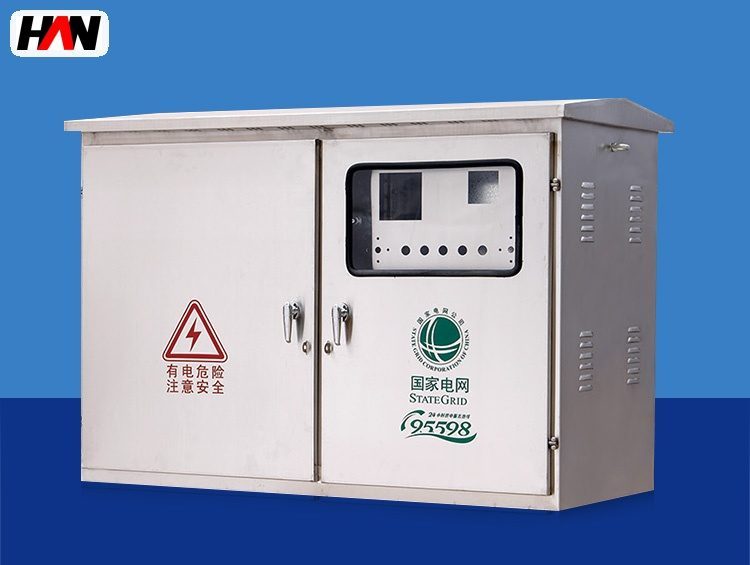
JP Outdoor Distribution Box
Weatherproof distribution at the yard and the dedusting area
Overview
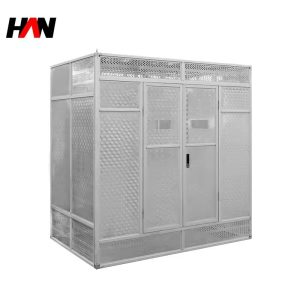
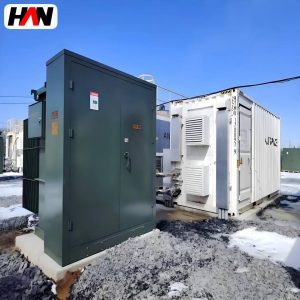
A JP outdoor distribution box is a metering and distribution enclosure built to stand in the open. It combines the incoming metering position, the main switch and the outgoing ways in one stainless steel body that is installed on a plinth or fixed to a wall at the point where the power is actually needed: the scrap yard, the dedusting fan platform, the water treatment area, the gate house, or the lighting circuit of a roadway inside the plant. HANI Metallurgy builds the range from 100 to 400 A at 400/230 V, with 6 to 12 outgoing ways, in IP54 or IP65, assembled and tested to IEC 61439-3 with the sealing performance verified to IEC 60529.
The reason a plant buys an outdoor box rather than building a room is distance. A dedusting fan bank may sit a few hundred metres from the nearest electrical house, and pulling a cable back to a room costs more than the switchgear that feeds it. The reason a plant then regrets a cheap outdoor box is the same distance: a box that collects condensation, whose door seal hardens in the first summer, or whose sheet-metal body rusts through at the welded corner will be opened far more often than it was designed to be. The design points that decide this are the alloy, the door arrangement, the rain path and the internal climate.
Technical Parameters
| Parameter | Unit | 100 A | 250 A | 400 A |
|---|---|---|---|---|
| Rated current | A | 100 | 250 | 400 |
| Rated voltage | V | 400 / 230 | 400 / 230 | 400 / 230 |
| Outgoing ways | ways | 6 | 8 | 12 |
| Protection degree | IP | IP54 / IP65 | IP54 / IP65 | IP65 |
| Enclosure material | — | 304 stainless | 304 / 316L | 304 / 316L |
| Mounting | — | wall | wall / plinth | plinth |
| Door arrangement | — | single, rain hood | double, rain hood | double, rain hood |
| Metering position | — | sealed window with padlocking facility | ||
| Cable entry | — | bottom, through removable gland plate | ||
| Internal climate | — | thermostat-controlled heater and breather | ||
| Design standard | — | IEC 61439-3, IEC 60529 | ||
Typical values for reference. Final current rating, way count, alloy and protection degree are confirmed on the nameplate and the approved project datasheet.
How It Works Under Furnace Duty
The first duty an outdoor box faces is water, and water arrives in three ways: rain driven sideways against the door, groundwater rising through the cable trench, and condensation forming on cold metal from the inside. The first two are solved by geometry. A rain hood above the door, a door flange that overlaps the body with a formed drip edge, a sill above the plinth and a cable entry that comes up into a sealed gland plate rather than through an open hole in the floor. The third is solved by climate control, not by sealing: a fully sealed box with a heater and a breather keeps the internal air above the dew point, while a box that is sealed with no heater will simply condense on the first cold night after a warm, humid day.
The second duty is the atmosphere. A melt shop yard carries metallic dust from scrap handling and from the dedusting stacks, and in a plant that pickles or acid-washes its product the air also carries chloride. Grade 304 stainless resists the first and handles a normal inland atmosphere; grade 316L, with molybdenum in the alloy, is the grade that survives chloride and the fine airborne dust of a coastal site. Welds are the weak point in both cases: a welded corner that was not passivated will show rust before the flat panel does, which is why the body is built with continuous welds that are cleaned after fabrication rather than spot-welded and painted.
The third duty is operational. An outdoor box is opened by people who are not standing in a comfortable room: in wind, in the rain, sometimes at night, with a torch. The interior has to be readable from the door — a phase-coloured busbar, a circuit schedule behind the door, a main switch that can be locked off, and a metering window that can be read and sealed without opening the live compartment. Where the box feeds a lighting circuit that runs along the yard, the outgoing ways are arranged so that a single faulty circuit can be isolated without darkening the whole roadway.
Engineering notes
1. IP65 seals heat in as effectively as they keep water out; a sealed box must be derated or fitted with a filtered vent, not both refused.
2. Slope the plinth away from the door and keep the box above the yard drainage level; most water damage starts as a wet cable trench.
3. Bring the earth conductor in first and take it out last, on a stud that is accessible with the door open and the panel in place.
Key Advantages
- Metering and distribution in one body: the incoming meter sits behind a sealed window and the outgoing ways sit behind a separate door, so a reading or a sealing check never requires opening a live compartment.
- Stainless body as standard: grade 304 for an inland yard, grade 316L where chloride is present, with continuous cleaned welds instead of painted seams that fail first.
- Rain path designed, not assumed: hood, drip edge, raised sill and a sealed gland plate under the box keep driven rain and trench water away from the devices.
- Condensation control: a thermostat-controlled heater and a pressure-compensating breather keep the internal air dry without turning the enclosure into a sealed oven.
- Installed where the load is: mounting on a plinth or on a wall saves the cable run back to an electrical house, which is usually the largest single cost of a remote yard load.
Selection and Commissioning
- Fix the location and the atmosphere. Distance from the source, prevailing wind, dust and chloride decide the alloy and the IP rating before any electrical choice is made.
- Size the incomer from the load list. Sum the connected load with a realistic diversity factor, then check that the incomer sits below the rating of the feeding cable.
- Reserve ways for the yard. Lighting, sockets and valve supplies are added over the life of the plant; a box supplied with every way used will be extended by a second box within a few years.
- Decide the earthing arrangement. Confirm whether the box is part of a TN system with a separate earth bar or an IT section, and specify the earth stud and the bonding of the door and the gland plate.
- Agree the cable entry before the foundation is cast. The gland plate position, the trench depth and the plinth height have to match the civil drawing, or the cables arrive at the wrong face of the box.
- Commission in wet weather if possible. An insulation test after a rain event, a heater function check and a door seal inspection will find the faults that a dry-day test hides.
Frequently Asked Questions
Q1: When is grade 316L necessary instead of 304?
A: When chloride is present in the air or on the surface — a coastal yard, a pickling or acid-washing line, or a site where salt is spread on the roads in winter. In a dry inland yard with metallic dust only, grade 304 is normally sufficient and costs less.
Q2: How is condensation inside the box controlled?
A: With a small thermostat-controlled heater that keeps the internal air above the dew point, plus a breather that lets the enclosure equalise pressure without drawing in dust-laden air. Sealing alone does not prevent condensation; it traps the moisture that is already inside.
Q3: Can a revenue meter be installed in the box?
A: Yes. The metering position is a separate compartment with a window and a padlocking or sealing facility, so the meter can be read and sealed by the utility without access to the outgoing ways. The CT ratio and the meter type are fixed by the utility’s requirements.
Q4: How is the balance between IP rating and heat handled?
A: By derating and by ventilation that is filtered rather than open. IP65 is specified for the dust and rain path, the devices are selected with thermal margin against the internal temperature rise, and where the load is continuous a filtered louver with a membrane is used so the enclosure breathes without admitting water.
Put the Board Where the Load Is
Send the location, the atmosphere, the load list and the cable route, and HANI Metallurgy will return an enclosure specification and an internal layout for your yard.