Description
Redefining Copper Slag Valorization: The Electrothermal Route
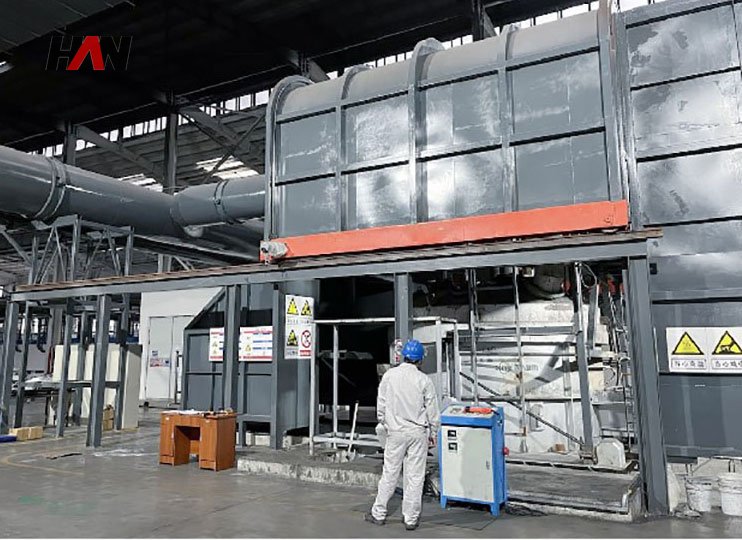
Copper smelters worldwide discharge more than 40 million metric tons of copper slag each year. This iron-silicate by‑product, once regarded as an unavoidable stockpile burden, is now being transformed into a valuable resource. Copper slag processing that relies on deep electrothermal reduction is setting a new benchmark, recovering not only entrapped copper but also converting the residual slag into clean construction material. In this landscape, HANI has engineered a complete copper slag treatment system that combines a proprietary submerged arc furnace with intelligent feeding, delivering what can genuinely be called slag recycling at scale.
| Mineral Phase | Typical Content (wt%) | Role in Processing |
|---|---|---|
| Fayalite (Fe₂SiO₄) | 45 – 65 | Dominant glass‑forming matrix, locks copper mechanically |
| Magnetite (Fe₃O₄) | 8 – 25 | Increases slag viscosity, hinders matte settling |
| Vitreous silica / quartz | 5 – 15 | Contributes to acid demand during fluxing |
| Copper sulfides / metallic Cu | 0.6 – 3.5 | Target metal for recovery |
| Spinel, alumina, Ca‑ferrites | 2 – 8 | Minor refractory phases |
Why Conventional Copper Slag Treatment Falls Short
Historically, copper slag treatment has leaned on slow natural cooling followed by flotation, or hydrometallurgical leaching. Both routes have inherent drawbacks: flotation recovers copper sulfide particles adequately down to roughly 0.25 % Cu in tailings, but metallic copper and sub‑micron matte droplets remain largely inaccessible. Leaching, while effective on oxide fractions, produces liquid effluents that demand strict environmental control. Most significantly, the residual slag—still laden with fayalite and amorphous silica—continues to be landfilled, falling short of a genuine slag recycling mandate.
Electrothermal copper slag processing overcomes these limitations by introducing a high‑temperature liquid‑phase reduction step. By creating a deep, superheated slag pool with precisely controlled redox potential, it is possible to chemically reduce magnetite, lower melt viscosity, and give entrained matte droplets the necessary residence time to coalesce and separate by gravity. This principle is the foundation of the HANI process.
| Parameter | Slow‑cool / Flotation | HANI Electrothermal Slag Recycling |
|---|---|---|
| Copper recovery | 82 – 92 % | ≥ 96 % |
| Cu in final slag | 0.25 – 0.45 % | < 0.15 % (often <0.10 %) |
| Iron recovery stream | None (lost in tailings) | Produces saleable Fe‑P alloy or clean slag for cement |
| Water consumption | High (flotation circuit) | Minimal (closed‑loop cooling) |
| Solid waste status | Tailings need permanent storage | Granulated slag certified for concrete aggregate |
Inside HANI’s Copper Slag Processing Technology
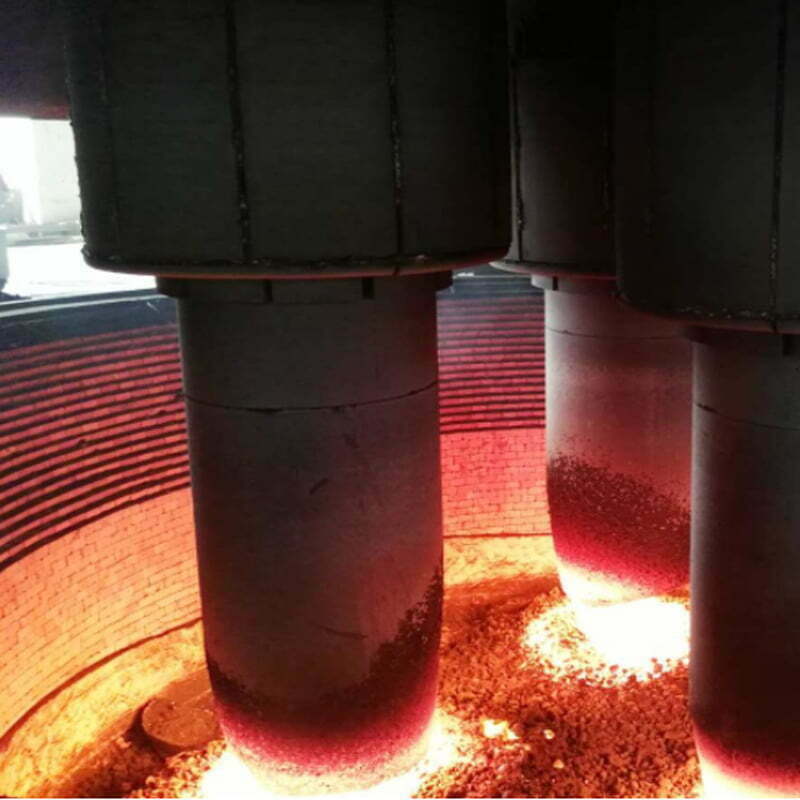
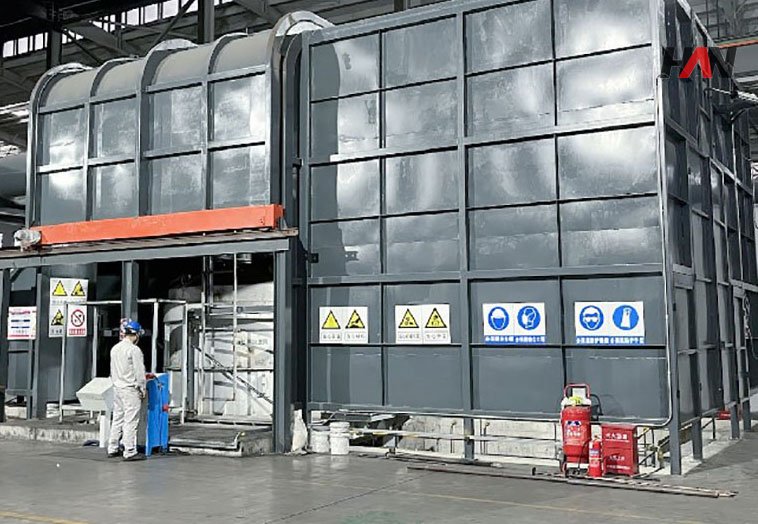
At the heart of the system is a custom‑designed submerged arc furnace that operates in a tightly sealed, reducing environment. Unlike a standard ferronickel or ferrosilicon furnace, this unit is optimised for the high FeO / SiO₂ ratio and the aggressive, low‑viscosity slag typical of copper slag processing. Several design features distinguish it:
- Special multi‑point feeding system – copper slag granules, anthracite/coke reductant, and limestone flux are proportioned and injected through distributed ports. This avoids segregation and maintains a consistent burden resistivity.
- Long‑arc, high‑resistance operation – the electrical regime is tuned to deliver a concentrated heat zone just below the electrode tip, ensuring magnetite reduction without overheating the refractory sidewalls.
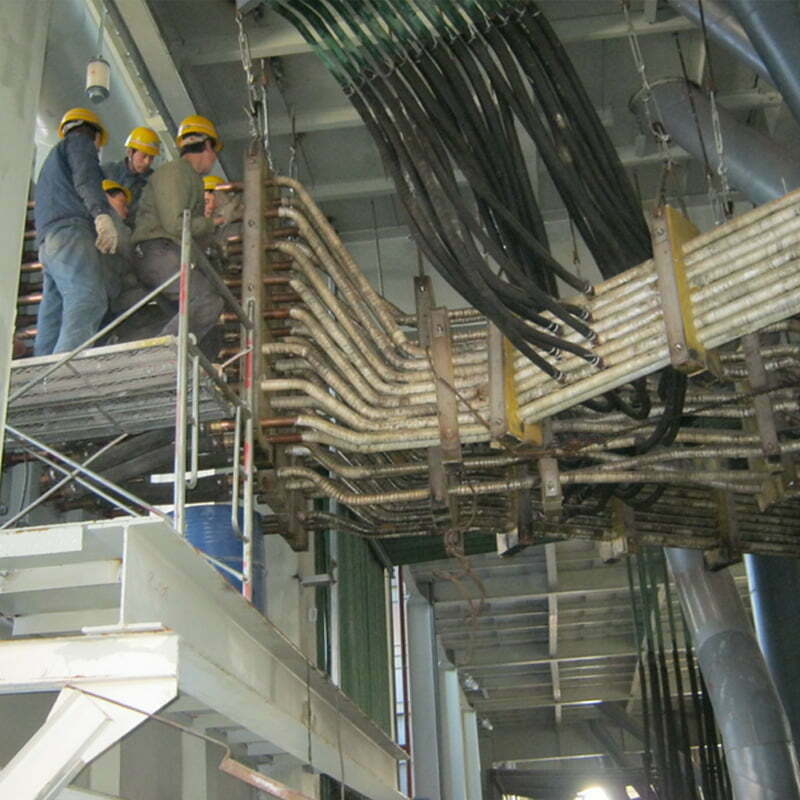
- Patented copper shoe and electrode management – water‑cooled copper contact shoes and an automatic slipping system allow continuous self‑baking electrode advancement, critical for 24/7 copper slag treatment campaigns that often exceed 300 days per year.
- Water‑cooled roof and wall panels – essential when processing a low‑viscosity slag that aggressively attacks alumina and magnesia refractories.
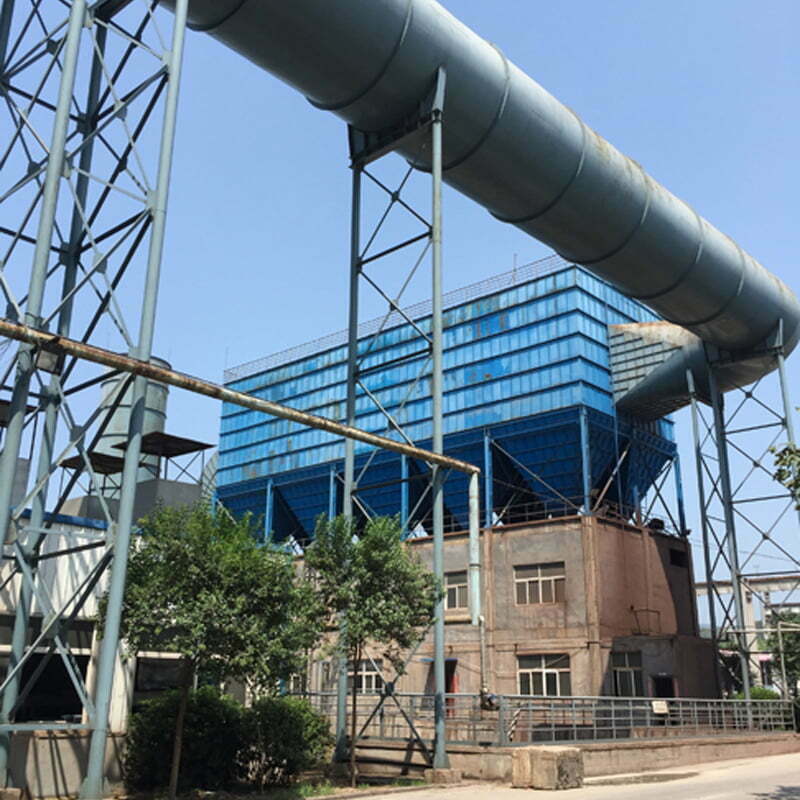
- Advanced off‑gas handling – the sealed furnace generates a CO‑rich off‑gas that is cleaned and can be used for drying, power generation, or further chemical synthesis, closing the energy loop.
A typical heat is initiated by establishing a molten heel. Crushed copper slag ( < 20 mm) is then continuously fed together with 6 – 12 % coke breeze and 5 – 10 % quicklime. The bath temperature is maintained at 1350 – 1480 °C. Within the liquid pool, magnetite (Fe₃O₄) reacts with carbon:
Fe₃O₄ + C → 3 FeO + CO ΔG° negative above ~1100 °C
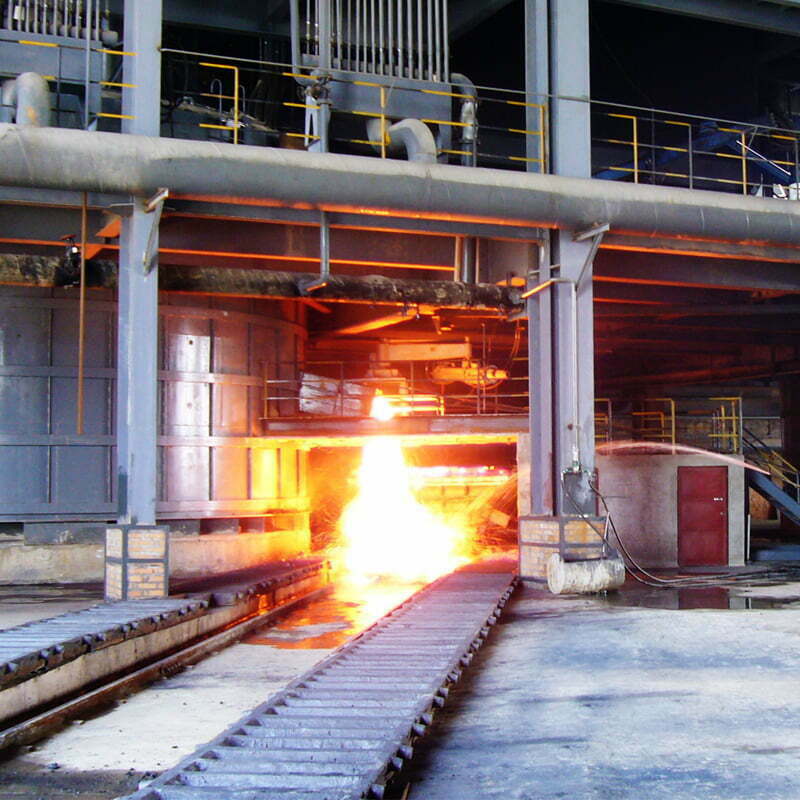
The newly formed FeO integrates into the fayalite slag while CO bubbles stir the bath and enhance collision of fine matte droplets. Simultaneously, copper‑bearing species (Cu₂S, Cu₂O, metallic Cu) coalesce into a dense matte‑alloy layer at the furnace bottom. Tapping is carried out intermittently: a high‑grade Cu‑Fe matte is transferred to a holding ladle, while the cleaned slag overflows through a separate tap hole, is water‑quenched, and becomes a glassy, black sand—slag recycling in its most complete form.
| Design Parameter | Typical Range | Comment |
|---|---|---|
| Furnace power | 6 – 45 MVA | Scaled to desired throughput (100 – 1200 t/d slag) |
| Operating voltage / current | 150 – 350 V / 20 – 110 kA | Adjusted for slag resistivity |
| Electrode type | Self‑baking (Søderberg) or pre‑baked graphite | Self‑baking preferred for 24/7 campaigns |
| Specific electrical consumption | 550 – 850 kWh / t slag | Depends on initial magnetite content |
| Reductant ratio | C / Fe₃O₄ molar ~ 0.9 – 1.05 | Precise control avoids over‑reduction to metallic iron |
| Tapping interval | 1.5 – 3 h | Matte and slag tapped independently |
Where Slag Recycling Becomes a Value Stream
A properly executed copper slag processing operation does far more than just reduce waste liability. The output streams demonstrate how thorough slag recycling can reshape a smelter’s economics:
- Copper‑rich matte (15 – 40 % Cu) is returned to the primary converting circuit, increasing overall copper recovery by 3 – 8 percentage points.
- Inert granulated slag meets EN 12620 and ASTM C33 standards for concrete aggregate, commanding a market price of USD 8–18 per ton in most regions. Its high hardness (Mohs 6–7) also makes it a premium abrasive for sandblasting.
- Off‑gas, after dedusting, carries a calorific value of 1800–2500 kJ / Nm³ and can displace natural gas in slag drying and raw material preheating.
- Heat recovery from furnace cooling water is routinely used for district heating or captive power generation, pushing the overall energy efficiency above 70 %.
⚙ Industrial reference – HANI’s track record
The first industrial‑scale copper slag treatment furnace based on this technology was commissioned by HANI in a major copper belt, processing over 800 tons of slag per day. Within six months of ramp‑up, the Cu content in the discarded slag dropped from an average of 0.82 % to below 0.12 %, while all granulated slag was being sold to a ready‑mix concrete plant. This milestone confirmed that electrothermal copper slag processing is not a lab curiosity but a rugged, bankable solution.
Frequently Asked Questions
Q: What exactly is copper slag processing and why does it need an electric furnace?
S: Copper slag processing is the set of metallurgical operations that separate trapped copper from iron‑silicate slag. An electric furnace is ideal because it provides the high, sustained temperature and strong reducing conditions required to break down magnetite and allow copper droplets to settle, something that conventional flotation cannot achieve with ultrafine or metallic copper.
Q: How is slag recycling different from simple slag disposal?
S: Disposal means piling slag in a landfill, which carries long‑term environmental liabilities. Slag recycling, on the other hand, transforms the slag into a certified product—such as concrete sand or abrasive grit—while simultaneously recovering valuable metals. It is a zero‑waste philosophy backed by thermal treatment.
Q: Can the HANI process handle both freshly generated slag and old slag dumps?
S: Yes. The technology is agnostic to slag age. Historically landfilled copper slag is simply crushed and screened before feeding. The chemical reduction mechanism remains identical, making copper slag treatment on legacy dumps an attractive remediation strategy.
Q: What is the typical payback period for a copper slag processing furnace?
S: Depending on local power cost and aggregate market, payback is usually between 2.5 and 4.5 years. The dual revenue stream—recovered copper value and sold granulated slag—combined with avoided landfill tax often delivers a post‑tax IRR above 20 %.
Q: Is the HANI furnace eligible for carbon credits or green certification?
S: In many jurisdictions, replacing Portland cement clinker with granulated copper slag reduces the CO₂ footprint of concrete by up to 80 kg per cubic meter. As the furnace off‑gas is captured and reused, the process aligns with several Article 6 and voluntary carbon‑credit methodologies. Detailed documentation is available for project developers.
Q: How is the furnace refractory protected against the aggressive, low‑viscosity slag?
S: A combination of water‑cooled copper panels, strategically placed freeze linings, and high‑chromia hot‑face bricks in the matte zone ensures campaign lives exceeding 5 years. The cooling philosophy is engineered specifically for the extreme fluidity of fayalite‑based slag encountered in copper slag processing.
Every ton of copper slag can be turned into a ton of resource. With rigorous process design, deep domain knowledge in submerged arc furnace technology, and a proven commitment to slag recycling, HANI continues to push the boundaries of what sustainable copper slag treatment can achieve—one furnace at a time.