Description
Ferromanganese Smelting Furnace
High-Carbon & Medium-Low Carbon Ferromanganese Smelting Equipment
The Cornerstone of Modern Alloy Steel Production
The Ferromanganese Smelting Furnace is an indispensable thermal processing unit in the global metallurgical industry. As a specialized Ferromanganese Furnace, it is engineered to reduce manganese ores into various grades of ferromanganese alloys, which serve as vital deoxidizers and desulfurizers in the steelmaking process. Without the output from high-quality manganese alloy smelting units, the production of high-strength, low-alloy (HSLA) steels and stainless steels would be technically impossible. At HANI, we bring nearly 30 years of industrial furnace design and manufacturing experience to the forefront of the industry, ensuring that our Ferromanganese Smelting Furnace units deliver unmatched reliability and cost-efficiency.
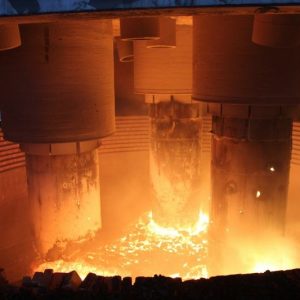
A modern Ferromanganese Furnace must operate under extreme thermal conditions while maintaining strict control over the slag-metal chemistry. HANI’s SAF for ferromanganese technology utilizes the latest in submerged arc principles, where the electric arc is entirely enclosed within the raw material charge. This design not only minimizes radiant heat loss but also facilitates a stable reduction environment for manganese alloy smelting. Our furnaces are designed to handle high-carbon ferromanganese (HC FeMn) as well as the specialized refining processes required for medium and low-carbon variants.
Comprehensive System Engineering of HANI Furnaces
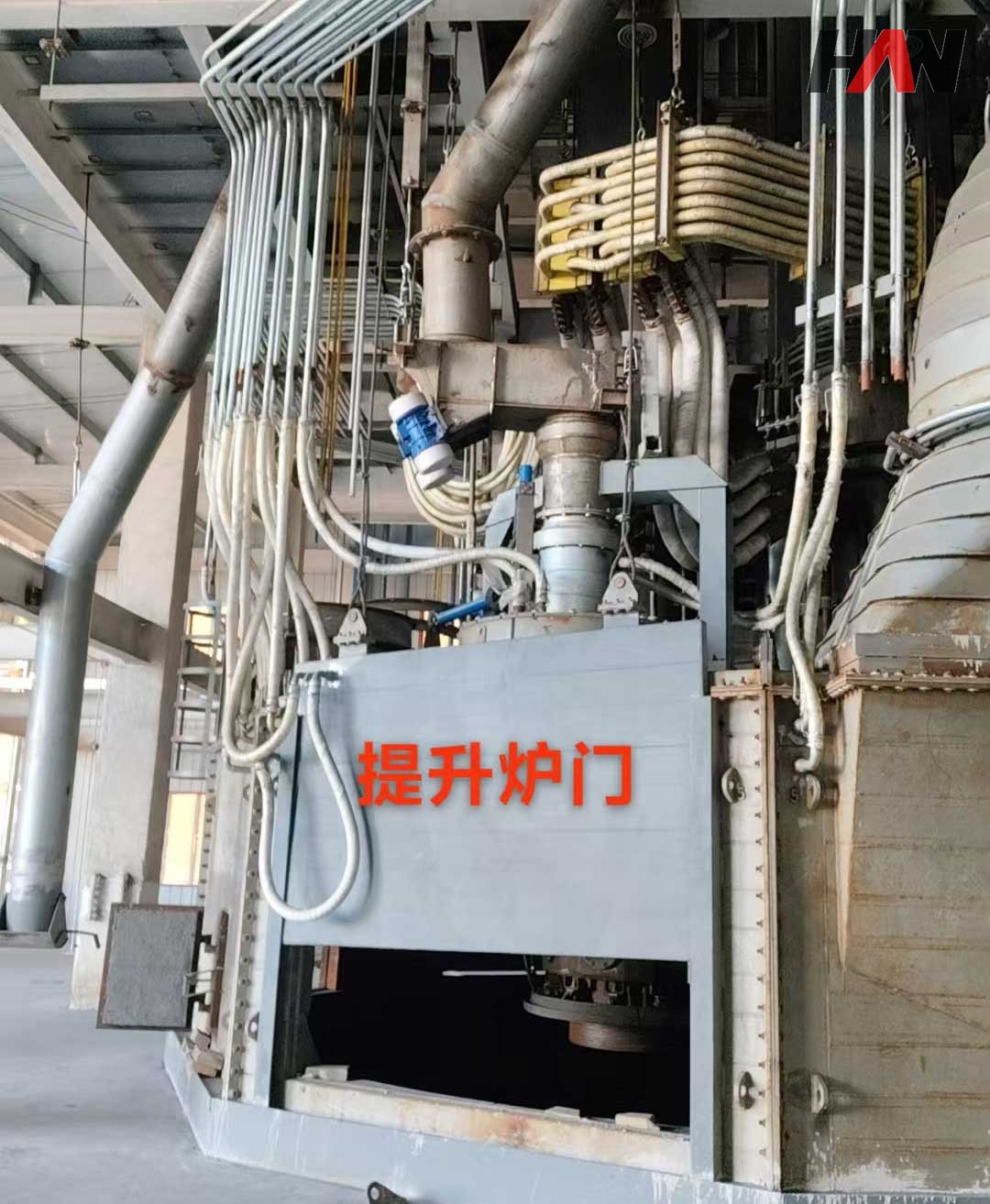
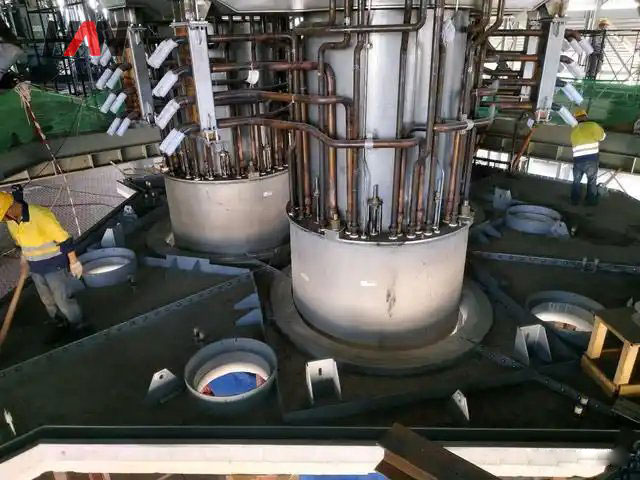
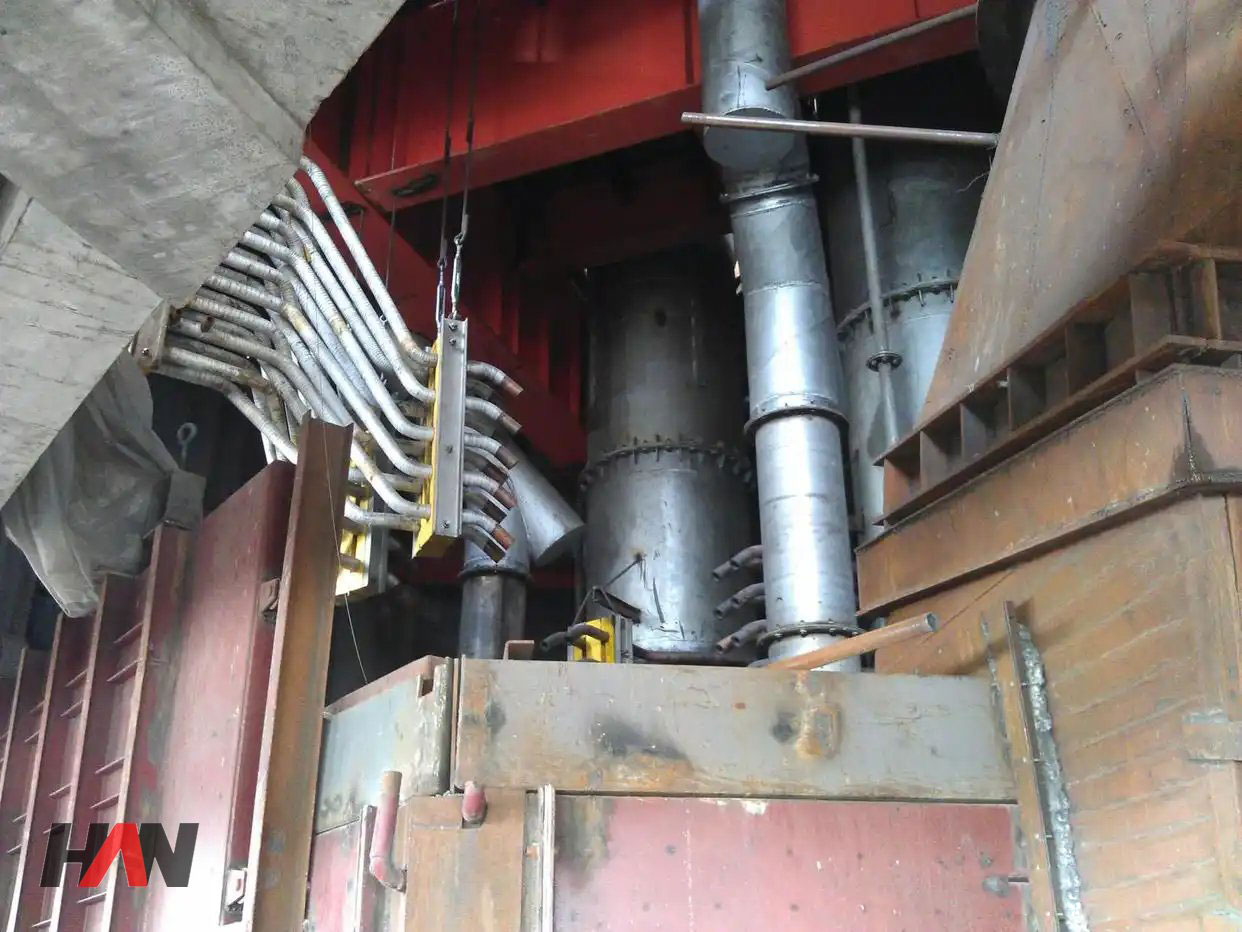
The structural integrity of a Ferromanganese Smelting Furnace is the primary determinant of its service life. HANI integrates high-grade mechanical engineering with advanced material science to produce smelting equipment that exceeds international standards. The primary components of our Ferromanganese Furnace include:
Heavy-Duty Furnace Shell
Constructed from high-tensile steel plates with reinforced ribs. HANI’s shell design for the SAF for ferromanganese often incorporates a rotating mechanism to prevent the buildup of sintered material on the hearth walls.
Advanced Refractory Lining
A multi-layer lining system utilizing carbon bricks for the hearth and high-alumina bricks for the side walls. This ensures the manganese alloy smelting process remains insulated from the steel shell.
Short-Net Power Delivery
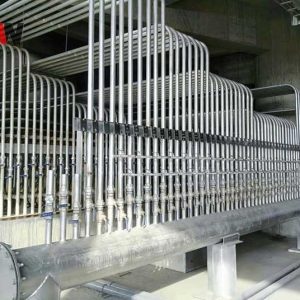
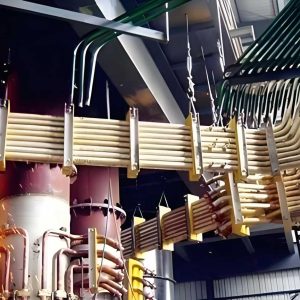
Optimized low-impedance busbars and water-cooled cables that minimize energy losses in the Ferromanganese Smelting Furnace, leading to a higher power factor and lower electricity costs.
Scientific Principles of Manganese Reduction
The core of manganese alloy smelting in a Ferromanganese Furnace is the carbothermic reduction of manganese oxides. This process is thermally demanding and chemically complex, requiring precise temperature gradients within the Ferromanganese Smelting Furnace hearth. Manganese ore, typically containing MnO2, Mn2O3, and Fe2O3, is introduced alongside carbon reductants (coke/coal) and fluxing agents (limestone/dolomite).
Primary Thermochemical Reactions:
2. MnO + C → Mn + CO (Direct Reduction at T > 1400°C)
3. Fe2O3 + 3C → 2Fe + 3CO (Iron Reduction)
4. SiO2 + 2C → Si + 2CO (Silicon Reduction)
In a HANI SAF for ferromanganese, the “submerged” state allows for a large reaction zone where the indirect reduction can take place in the upper layers, utilizing the CO gas rising from the hearth. This significantly improves the carbon utilization efficiency of the Ferromanganese Smelting Furnace. The slag chemistry is meticulously managed to maintain a high Mn/Fe ratio in the final alloy while ensuring the slag is fluid enough for easy tapping.
Standard Technical Parameters for HANI Ferromanganese Units
| Model Specification | Unit | 16.5 MVA | 25.5 MVA | 33.0 MVA | 45.0 MVA |
|---|---|---|---|---|---|
| Transformer Capacity | MVA | 16.5 | 25.5 | 33.0 | 45.0 |
| Hearth Diameter | mm | 6500 | 8200 | 9500 | 11000 |
| Electrode Consumption | kg/t | 30-40 | 25-35 | 22-30 | 20-28 |
| Annual Output (Approx.) | t/a | 35,000 | 55,000 | 72,000 | 100,000 |
| Power Consumption | kWh/t | 2600-3200 | 2500-3000 | 2400-2900 | 2300-2800 |
Production Reference & Operational Insights
Operational excellence in a Ferromanganese Smelting Furnace starts with material preparation. Manganese ores must be sized between 10-50mm to ensure proper gas permeability within the Ferromanganese Furnace. Fines should be minimized as they cause “eruptive tapping” and uneven gas flow. HANI’s SAF for ferromanganese is specifically engineered to accommodate a wide range of ore qualities, including low-grade ores from various geographical regions.
Best Practices for Manganese Alloy Smelting:
- • Maintain a stable electrode immersion depth to protect the furnace hearth and optimize the power factor.
- • Tap the Ferromanganese Smelting Furnace every 2.5 to 3.5 hours to prevent excessive accumulation of molten metal, which can cause electrode “floating.”
- • Monitor slag basicity (CaO/SiO2) continuously. A basicity of 1.0 to 1.3 is typical for HC FeMn production in a Ferromanganese Furnace.
- • Utilize HANI’s integrated automation to track the real-time energy balance of the Ferromanganese Smelting Furnace.
Why HANI Leads the Ferromanganese Furnace Market
At HANI, we don’t just provide smelting equipment; we provide a complete metallurgical solution. Our Ferromanganese Smelting Furnace units are the result of intense research into energy recovery and environmental compliance.
1. Full Enclosure for Gas Recovery
HANI’s Ferromanganese Furnace design features a completely sealed cover. This allows for the collection of high-calorie furnace gas (up to 70% CO), which can be utilized for power generation or ore pre-heating, drastically reducing the net energy cost of manganese alloy smelting.
2. Precision Electrode Management
Our SAF for ferromanganese utilizes a hydraulic slipping and lifting system with millimeter precision. This ensures that the arc zone is always exactly where it needs to be for maximum reduction efficiency in the Ferromanganese Smelting Furnace.
3. Robust Environmental Systems
Equipped with high-efficiency baghouse filters and scrubbers, HANI’s smelting equipment ensures that your facility meets even the strictest Tier 1 environmental regulations globally.
Frequently Asked Questions (FAQ)
Q1: What is the difference between HC FeMn and MC/LC FeMn production in a Ferromanganese Smelting Furnace?
A: High-carbon ferromanganese is produced directly in the Ferromanganese Furnace through carbothermic reduction. Medium and low-carbon ferromanganese (MC/LC FeMn) usually requires a second refining stage, often using a refined manganese-silicon alloy in an oxygen-blown converter or a specialized SAF for ferromanganese refining unit to lower the carbon content.
Q2: How does HANI ensure the safety of the smelting furnace shell?
A: We utilize a sophisticated “forced water cooling” system for the shell and the bottom of the Ferromanganese Smelting Furnace. Real-time temperature sensors are embedded in the refractory lining, providing an early warning system to prevent “burn-through” during intensive manganese alloy smelting cycles.
Q3: What raw materials are needed for a standard SAF for ferromanganese?
A: The primary inputs for a Ferromanganese Furnace are manganese ore (various grades), coke or coal (as a reductant), and fluxing agents like limestone or dolomite. In some cases, manganese sinter is used to improve the efficiency of the Ferromanganese Smelting Furnace by pre-reducing some of the oxides.
Q4: Can HANI’s smelting equipment be customized for different power grids?
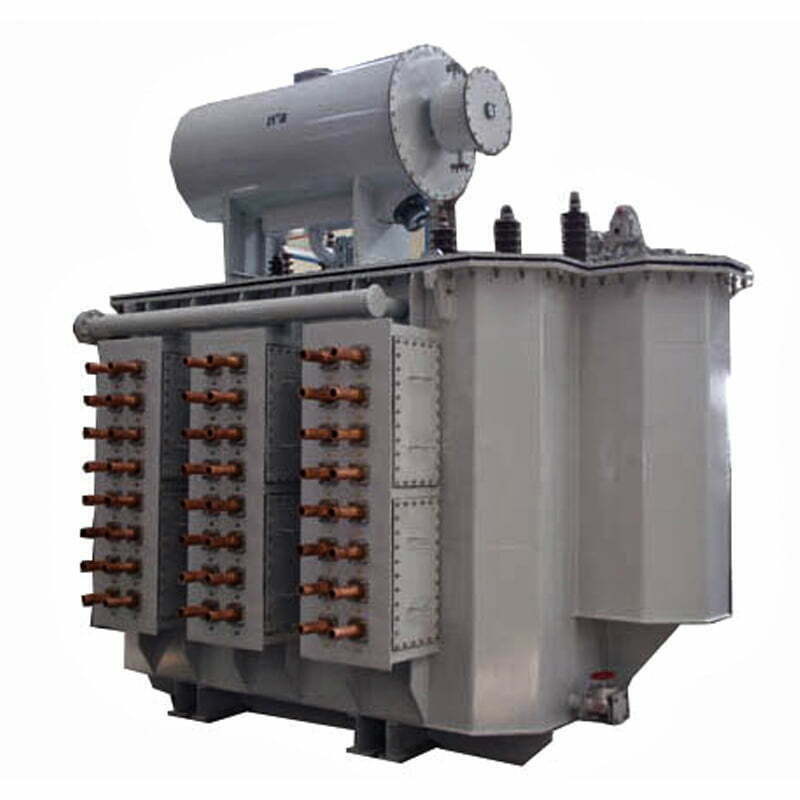
A: Absolutely. HANI designs the furnace transformers and compensation systems to match the specific voltage and frequency of your local grid, ensuring that the Ferromanganese Smelting Furnace operates with maximum electrical stability and minimal harmonics.
Optimize Your Manganese Production Today
Whether you are expanding your existing capacity or building a new metallurgical complex, HANI’s Ferromanganese Smelting Furnace technology is the key to sustainable profitability. Contact our engineering team for a detailed technical proposal for your manganese alloy smelting project.
© HANI Metallurgy Group – Global Leaders in Smelting Furnace Technology.