Description
Melt Shop Motor Control Centre
Feeding pumps, fans and dedusting drives from one lineup
Overview
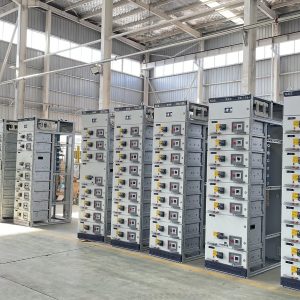
A motor control centre is a low-voltage lineup that does two jobs at once: it distributes power to a group of drives and it controls them. Each outgoing unit carries a starter, a short-circuit protective device, a contactor and the control interface for one motor, so the lineup becomes the place where a pump is started, a fan is interlocked and a trip is reported. In a melt shop that is a large and very mixed population: cooling water pumps, dedusting fans, hydraulic power packs, charging and conveyor drives, compressors, workshop ventilation. Individually they are modest loads. Together they decide whether the furnace can run at all, because a stopped water pump ends a campaign faster than a transformer fault.
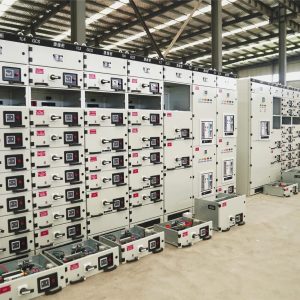
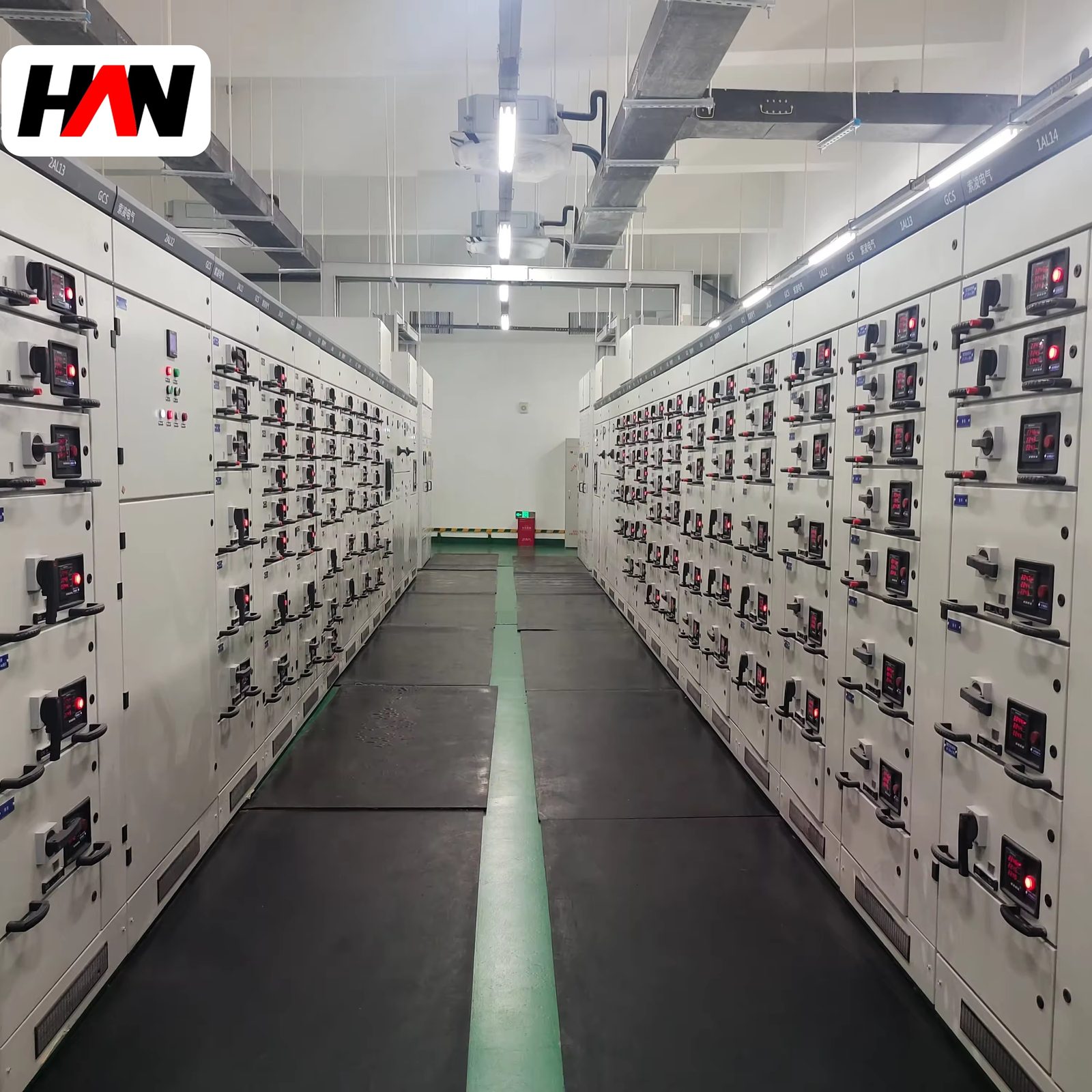
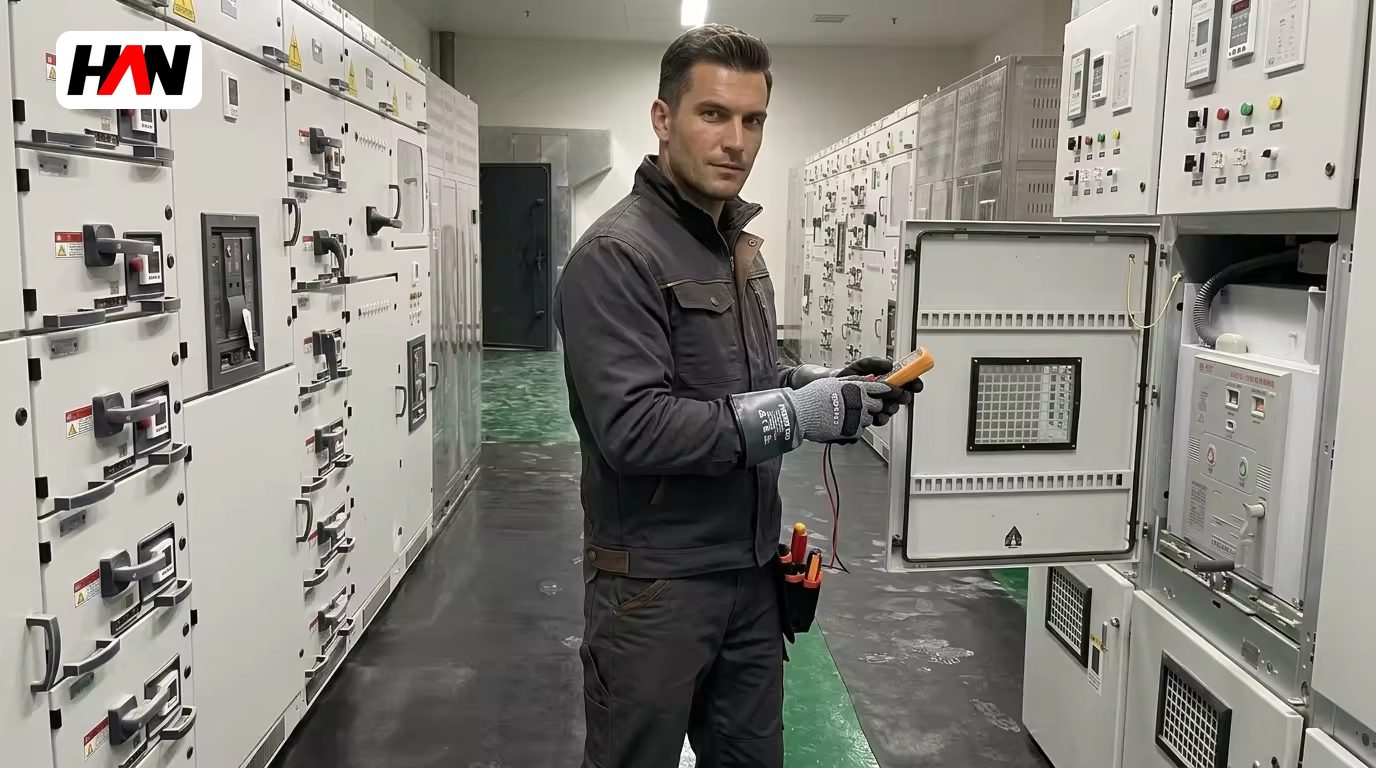
The GCK system is a modular withdrawable assembly for this duty. Busbar current runs from 400 A to 4000 A at 400 V or 690 V, short-time withstand reaches 50 to 100 kA, and the vertical space is divided into 8E modules so that a starter occupies a defined slot instead of a bespoke sheet-steel box. The lineup normally stands in the melt shop electrical room, close to the furnace transformer and above the cable cellar, so that motor cables and control cables take short and separate routes. HANI Metallurgy builds these boards together with the distribution switchgear that feeds them.
Technical Parameters
| Parameter | Unit | 400 A | 2000 A | 4000 A |
|---|---|---|---|---|
| Busbar rated current | A | 400 | 2000 | 4000 |
| Rated operational voltage | V | 400 / 690 | ||
| Short-time withstand current Icw | kA / 1 s | 50 | 65 | 100 |
| Drawer module height | E | 8E / 16E / 24E | ||
| Starter types | — | DOL, star-delta, soft starter, VFD | ||
| Form of separation | — | Form 3b / 4b | ||
| Protection degree | — | IP31 to IP54 | ||
| Busbar material | — | Tinned copper | ||
| Control interface | — | Hard-wired I/O and fieldbus to PLC | ||
| Design standard | — | IEC 61439-2 | ||
Typical values for reference. Final ratings, drawer schedule and starter assignment are fixed on the nameplate and the approved project datasheet.
How It Works Under Furnace Duty
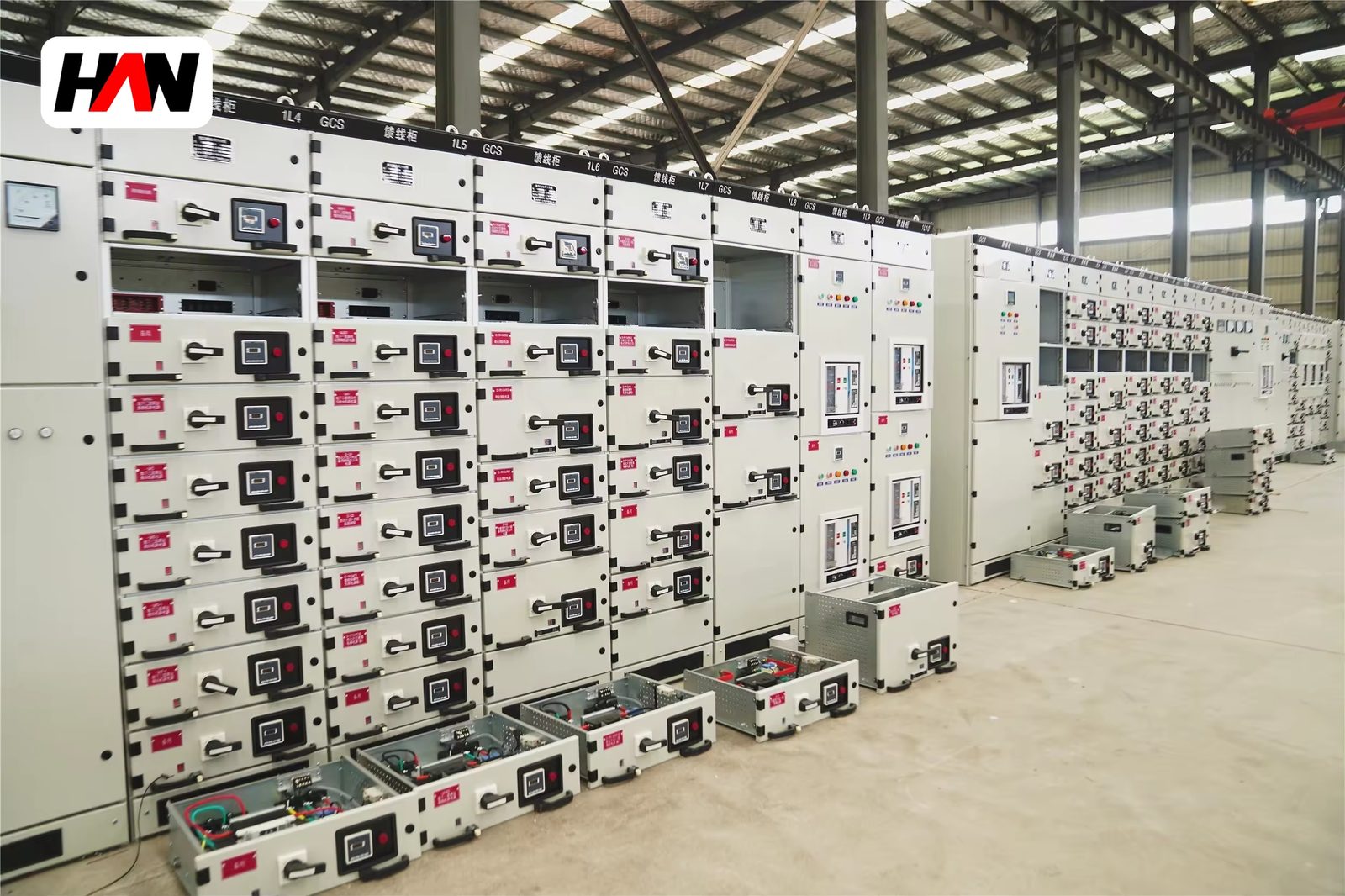
The vertical height of a section is divided in 25 mm steps, and one module of 8E is therefore 200 mm. Every starter is built into one or more modules, so the lineup is designed on a grid rather than a blank door. A direct-on-line starter for a small pump fits in 8E, a star-delta starter needs 16E because it carries three contactors, and a soft starter or a variable-frequency drive of any size takes 24E or several modules in a fixed compartment. Each drawer has three positions: connected, test and disconnected. In the test position the control circuit is live and the main contacts are not, which allows a rotation check without energising the motor.
Two short-circuit numbers matter on the nameplate. Icw is the short-time withstand current the busbar, the supports and the plug contacts can carry for a stated duration, in this case one second, while the upstream device is clearing the fault. It is a thermal and a mechanical statement at the same time. Ipk is the peak withstand current, the first-cycle asymmetrical value that produces the electromagnetic force which tries to tear the busbar apart. The choice is driven by the prospective fault current at the board and by the let-through of the upstream breaker, never by the sum of the connected motor load. A 400 A board and a 4000 A board may sit on the same system and still need different values, because their positions in the network are different.
Heat is the other design driver. Losses come from the busbar, from the protective devices and, above all, from drives. IEC 61439-2 requires the assembly to be verified by a temperature-rise test, and the result is tied to the ambient temperature assumed in that test. A melt shop electrical room in summer is not that ambient, so the incoming rating is derated, filtered fans or a forced ventilation section are added, and VFD compartments get their own airflow with the heat sink outside the enclosure where the arrangement allows it. A drive that is run at its nameplate current inside a closed cubicle will shorten the life of its capacitors, whatever the busbar rating says.
Engineering notes
1. Drawers are coded by rating. A 24E starter cannot be pushed into an 8E slot, and the crank cannot be turned with the door open.
2. Interlocks that protect the furnace are hard-wired, not written in the PLC: cooling water flow proven, dedusting fan running, hydraulic pressure healthy.
3. Control and power cables leave through separate zones. A 690 V motor cable routed beside an analogue signal is a fault waiting for a commissioning day.
Key Advantages
- One lineup instead of scattered starters: pumps, fans and hydraulic packs share a busbar, a cable cellar and a single control interface, which shortens both the power and the signal route.
- Drawer replacement in minutes: a failed starter is swapped for a spare module of the same size without touching the busbar or the incoming supply.
- Modular 8E grid: the section height is allocated in defined modules, so spare capacity and future drives can be planned on a drawing instead of improvised on site.
- Type-tested assembly: busbar, separation and temperature rise are verified to IEC 61439-2 as a system, not assembled from individually tested components.
- Process interlocks built in: the wiring for water, dedusting and hydraulic permissives lives in the board, where it can be tested before the furnace is charged.
Selection and Commissioning
- Start from the motor list. Rating, starting method, duty cycle and process group decide the module size and the number of sections long before the busbar is chosen.
- Group by process, not by size. Cooling water in one section, dedusting in another, charging in a third; a fault then isolates one function instead of half the shop.
- Set Icw and Ipk from the fault study. Confirm the duration against the upstream protection curve, because one second of withstand is only useful if the device clears inside it.
- Match the starter to the torque curve. Direct-on-line where the supply allows it, star-delta or a soft starter where starting current is limited, a drive where flow or pressure must follow a set point.
- Do the heat balance of the room. Sum the losses of the drives, check the ventilation of the electrical room, and derate the incoming current for the real ambient.
- Commission with the process. Rotation of every pump, trip test of every starter, and a live check of each interlock with the furnace control system in test mode.
Frequently Asked Questions
Q1: Can a motor control centre and a distribution board share one lineup?
A: They can share a room and a busbar, but not the same section. A feeder for a distribution board carries no starter and no control interface, while a motor module does both. Keep them in separate sections with their own dividers, and the form of separation you have specified stays valid.
Q2: How large a motor can one drawer carry?
A: The limit is the module, not the busbar. A small direct-on-line starter fits in 8E, a reversing or star-delta starter needs 16E, and a drive or a large frame breaker takes 24E. Above the largest drawer the starter becomes a fixed compartment with a separate incoming device.
Q3: What matters when a drive is installed inside the cubicle?
A: Three things. The losses have to leave the enclosure, the motor cable length has to stay inside the limit of the drive output filter, and the harmonic current has to be declared to the upstream protection and to the compensation study. The heat is usually the item that is underestimated.
Q4: How is Icw chosen in practice?
A: From the prospective fault current at the board, reduced by the let-through of the upstream device, and from the time that device needs to clear. Round up to the next standard value, and confirm the peak value as well, because the busbar supports fail mechanically before the copper melts.
Build the Motor Lineup Around the Process
Send the motor list, the starting method of each drive and the fault level at the board, and HANI Metallurgy will return a section layout, a drawer schedule and a heat balance.