Description
35 kV Pad-Mounted Transformer
Compact outdoor supply for melt shop yards
Overview
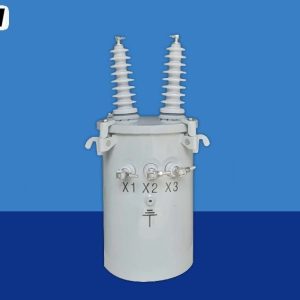
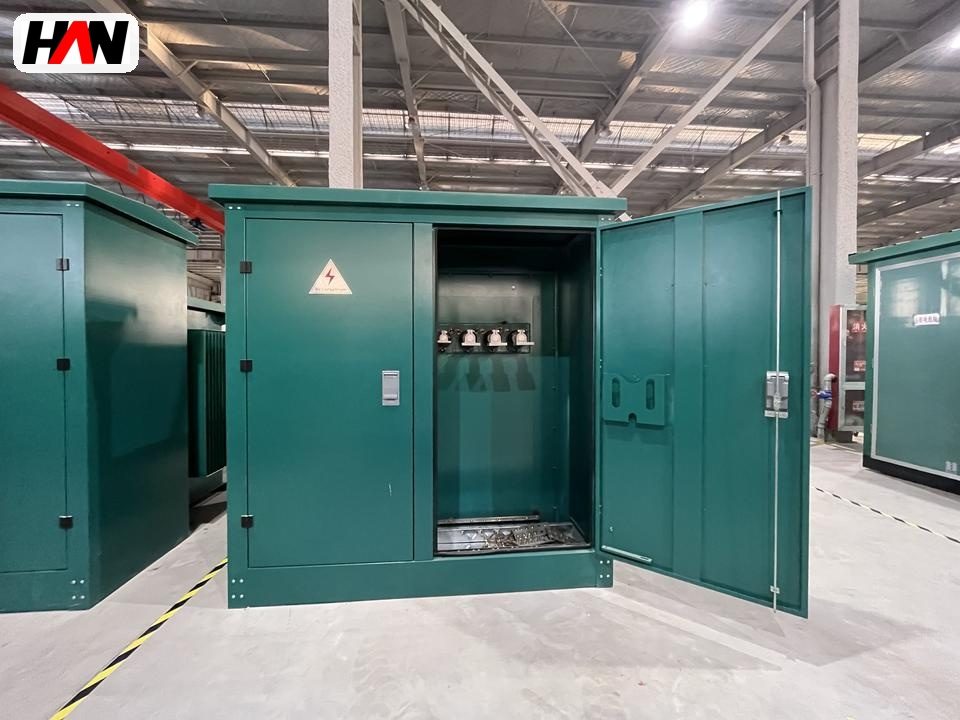
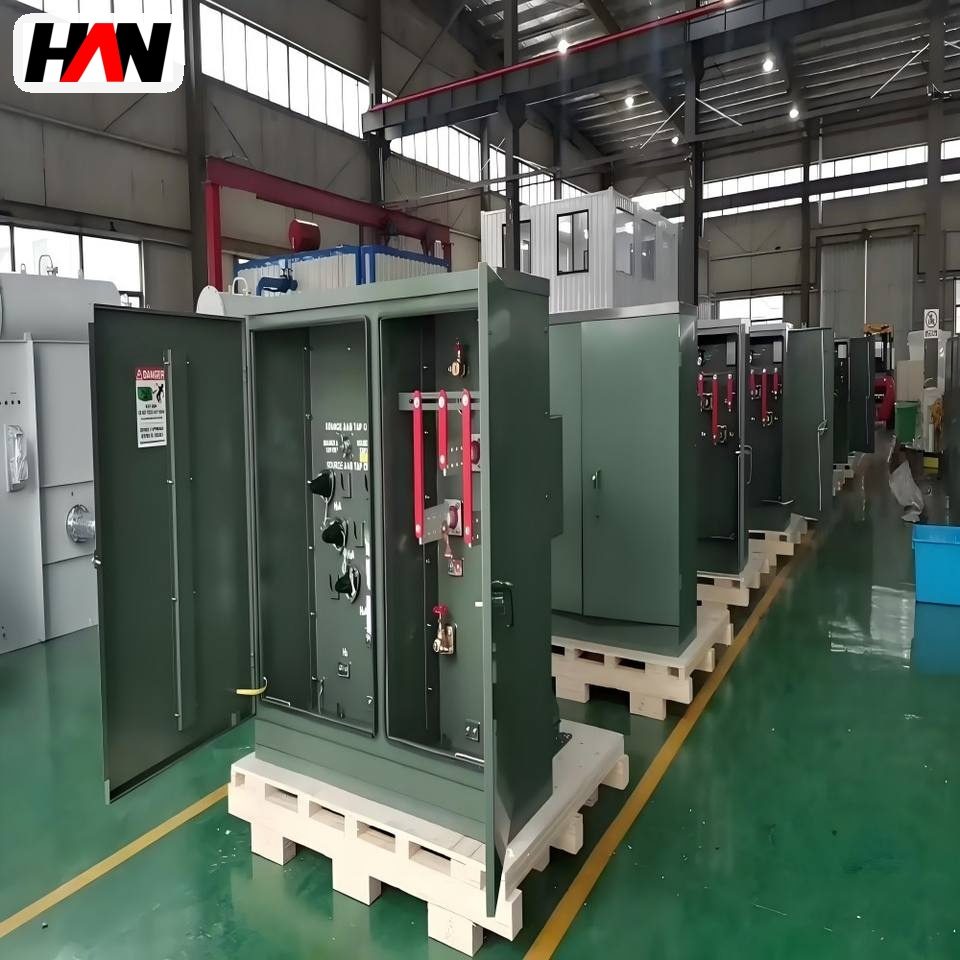
A 35 kV pad-mounted transformer is a distribution substation in a single enclosure that stands on a concrete pad at ground level. Inside the painted steel or stainless housing are three things that would otherwise occupy a room: a 35 kV load-break switch with fuses, an oil-immersed transformer stepping 35 kV down to 400 V or 690 V, and a low-voltage compartment with the outgoing breakers. Doors on the front give access to each compartment from the yard, so the unit can be inspected, switched and isolated without entering a building. In a melt shop it is the standard way to supply the loads that sit outside the main electrical house: dedusting fans, water treatment, the scrap yard crane, the lime and alloy stores and the workshop boards.
The voltage level is the point of the product. A plant with a 35 kV ring can drop straight to 400 V at the load instead of distributing at 10 kV and stepping down again, which removes a board, a cable run and a set of protection relays from the project. Ratings run from 100 kVA to 5000 kVA, and the enclosure is sealed against dust and rain to IP54 so that it survives a yard where the air carries mill scale and the ground carries water. Where the main smelting feed is handled by a dedicated submerged arc furnace transformer, these pad-mounted units take care of everything behind it.
Technical Parameters
| Parameter | Unit | 630 kVA | 1250 kVA | 2500 kVA |
|---|---|---|---|---|
| Rated capacity | kVA | 630 | 1250 | 2500 |
| Primary voltage | kV | 35 | 35 | 35 |
| Secondary voltage | V | 400 | 400 | 690 |
| Impedance voltage | % | 6.5 | 6.5 | 6.5 |
| Cooling | — | ONAN | ONAN | ONAN |
| HV switching | — | load-break switch and fuse | ||
| Protection degree | — | IP54 | IP54 | IP54 |
| Enclosure | — | sealed, double door, pad-mounted | ||
| Overall dimensions | mm | per approved outline drawing | ||
| Efficiency at full load | % | 98.6 – 99.1 | ||
| Design standard | — | GB 1094.1 / IEC 60076-1 | ||
Typical values for reference. Final ratings, fuse selection and outline dimensions are confirmed on the nameplate and the approved project datasheet.
How It Works Under Furnace Duty
The protection philosophy is the first difference from a room substation. A pad-mounted unit normally carries a load-break switch and a set of high-voltage fuses rather than a circuit breaker and a relay. The switch interrupts load current and provides a visible break for maintenance; the fuse clears a transformer fault. That combination works because the transformer is small relative to the plant fault level, and because the fuse curve can be chosen to sit above the transformer inrush and below the withstand of the tank. It also means the unit cannot be reclosed remotely, so the fuse has to be replaced by hand after a fault, and the cause has to be found before the supply is restored.
Heat is the second design constraint. A sealed IP54 enclosure keeps dust and water out, and in doing so it also keeps heat in. The transformer dissipates its losses through the tank surface, the corrugations and, in larger ratings, a radiator bank, and the air inside the enclosure has to be able to leave. Most units rely on natural ventilation through louvres with filters, with a thermostat-controlled fan added where the ambient temperature or the load profile demands it. A yard in summer can hold air well above the design ambient, and a unit that was selected for 40 degrees will not deliver nameplate at 50. Ventilation openings must be positioned so that heat leaves at the top and cool air enters low down.
The third constraint is the enclosure itself. A melt shop yard is an aggressive place: mill scale dust, water from the washing of the yard, occasionally the runoff from a slag pit. Painted carbon steel will survive if the coating system is specified properly and touched up after damage, but where the air is damp or mildly corrosive, an aluminium-zinc coated sheet or a stainless steel housing is the more economical answer over a ten-year horizon. Hinges, gaskets and the padlock arrangement deserve as much attention as the transformer inside, because a door that does not seal turns IP54 into IP23 within a season.
Engineering notes
1. The fuse is a system component: it must coordinate with the transformer inrush, the cable and the downstream breaker curve, not only with the transformer rating.
2. Leave the access doors a working clearance and keep the ventilation louvres out of the prevailing wind and away from dust sources.
3. A pad-mounted unit needs an earthing connection to the plant grid at the pad, not only a local rod.
Key Advantages
- No substation building: switch, transformer and low-voltage distribution share one pad-mounted enclosure, so the civil works reduce to a concrete base and a cable trench.
- Direct 35 kV to 400 V: the 10 kV intermediate level disappears from the project, together with its board, cable and protection settings.
- Sealed against the yard: IP54 housing, gasketed double doors and filtered louvres keep mill scale and rain out of the live compartments.
- Simple protection scheme: a load-break switch with fuses is easy to operate, easy to lock off and needs no relay settings to drift out of calibration.
- Placement close to the load: installing at the fan house or the water treatment plant shortens the low-voltage cable run, which is where most of the voltage drop and the cable cost sit.
Selection and Commissioning
- Set the rating from the load, then check the ambient. Size for the connected load and its diversity, then confirm the enclosure ventilation is adequate for the summer temperature at the pad, not the annual average.
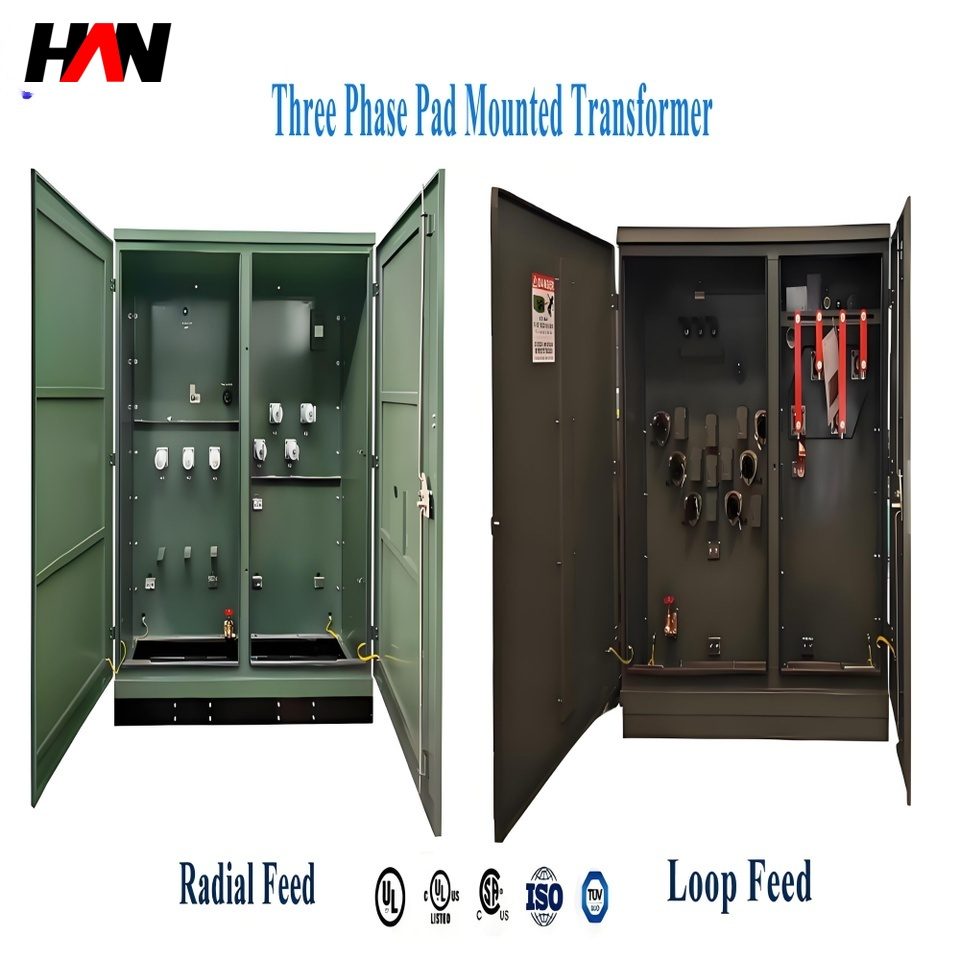
- Choose radial or ring connection. A radial feed needs one switch and one fuse set; a ring feed needs two ways per unit so a section can be isolated without dropping the rest of the loop.
- Select the fuse with the cable. Give the transformer inrush curve, the transformer damage curve and the cable rating to one party so that the fuse satisfies all three; a fuse chosen on kVA alone is a common source of nuisance trips.
- Decide the enclosure material early. Painted steel for a dry inland yard, aluminium-zinc or stainless where the air is damp or corrosive; the material decision changes the price and the delivery more than the transformer does.
- Plan the pad and the earthing. A level concrete pad above the yard drainage level, a cable entry that can be sealed, and two earth connections to the plant grid, one at each end of the enclosure.
- Commission with a heat run and a trip test. Run at site load for a full shift and log the air temperature inside the enclosure; then check the switch interlock, the door limit and the low-voltage breaker settings before handover.
Frequently Asked Questions
Q1: Can the unit stand in a yard walkway?
A: Only with the door swing and the operating clearance respected. Leave enough space for a person to open both doors fully, operate the switch and handle a fuse, and protect the enclosure with bollards where vehicles or ladles pass close by.
Q2: How is the fuse selected?
A: From three curves together: the transformer inrush, the transformer thermal damage curve and the cable rating. The fuse must ride through energisation, protect the tank from a sustained fault, and still leave the downstream breaker able to clear a low-voltage fault first.
Q3: Does the enclosure need internal temperature control?
A: Temperature monitoring is recommended on every unit and a thermostat-driven fan is added where the rating is close to the enclosure limit or the site is hot. The fan must be interlocked so that it runs only when the doors are closed, otherwise it moves dust instead of heat.
Q4: How is condensation handled in a rainy region?
A: With a sealed housing, gaskets in good condition, louvres that face down and away from the prevailing wind, and a small anti-condensation heater on the low-voltage side. The heater is not there to warm the transformer, only to keep the air inside above the dew point.
Put the Substation Where the Load Is
Send the yard layout, the 35 kV fault level and the load list, and HANI Metallurgy will return a pad-mounted configuration with the switching, fusing and ventilation fixed.