Description
Cast Resin Dry-Type Transformer
Oil-free power distribution inside the furnace building
Overview
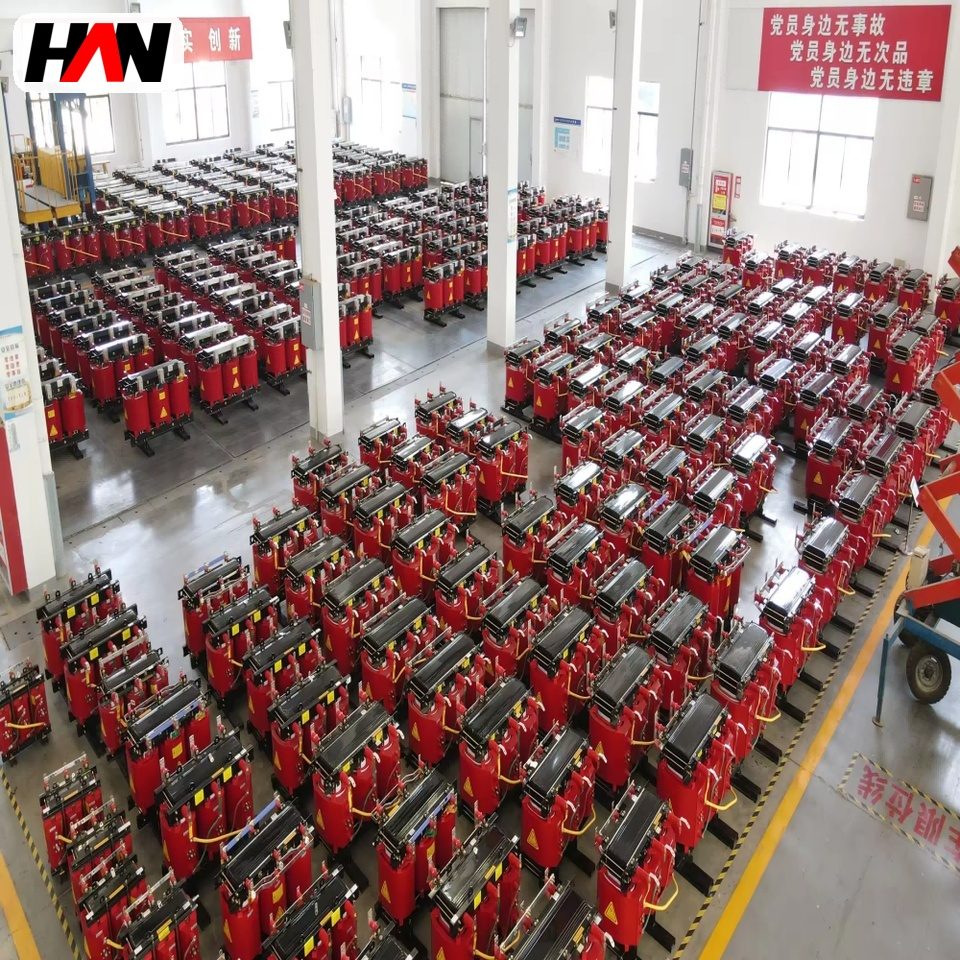
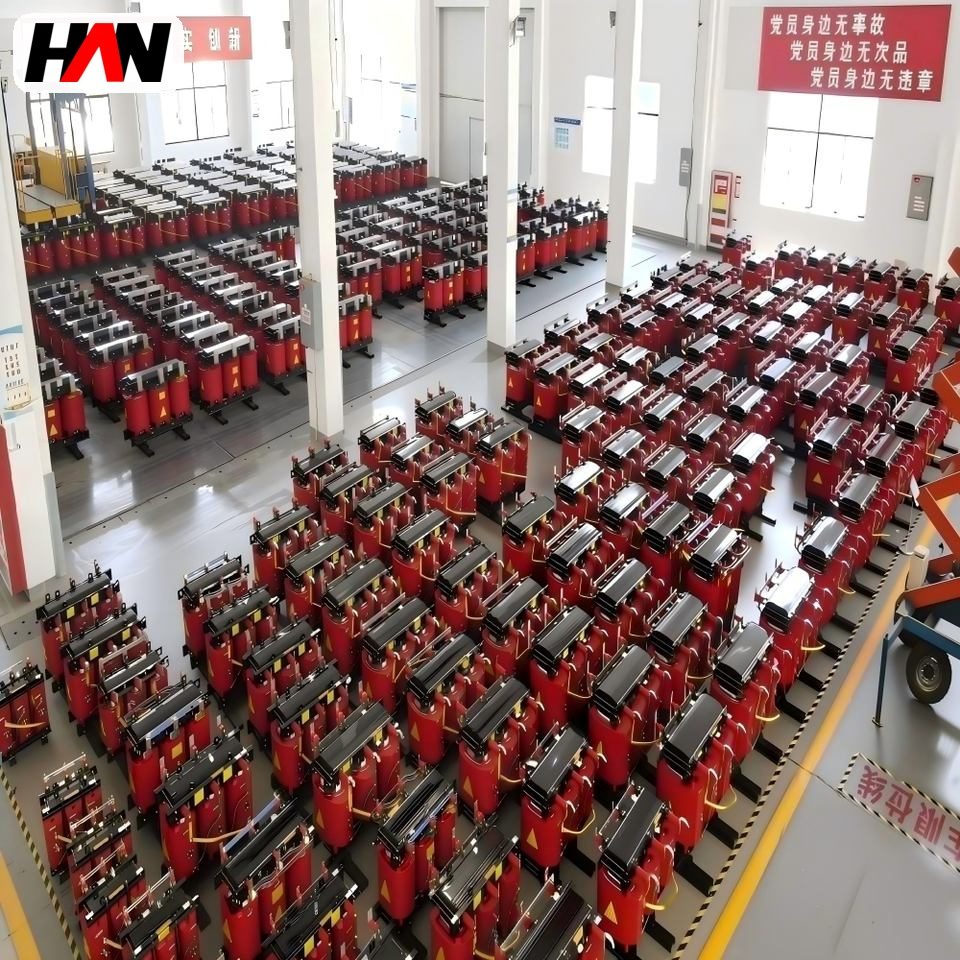
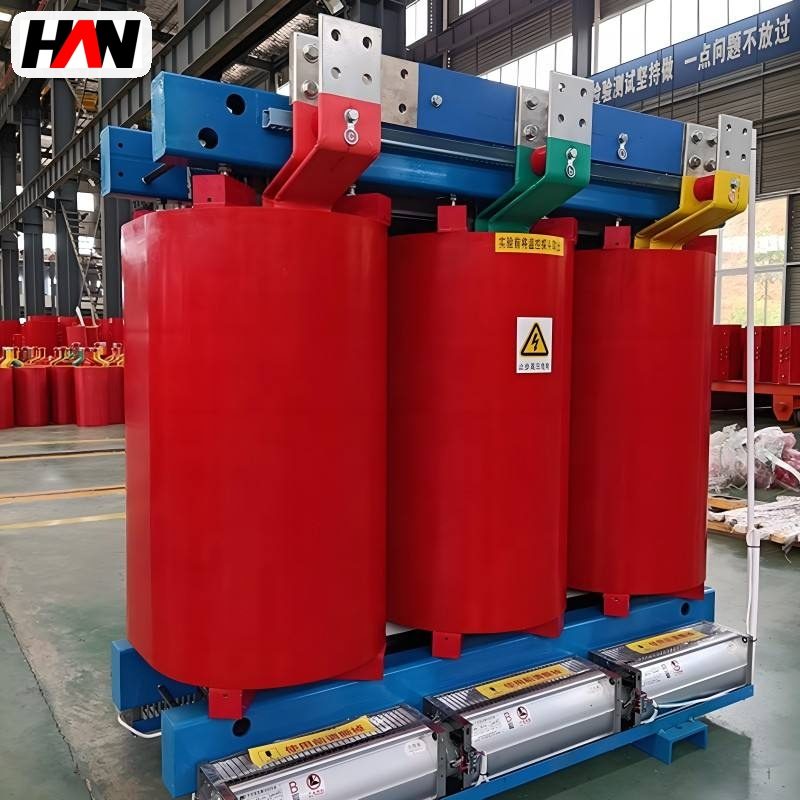
A cast resin dry-type transformer is the unit that distributes power inside a melt shop building without oil. Its windings are encapsulated in epoxy resin under vacuum, the core and coils are cooled by air, and there is no tank, no conservator and no insulating liquid to burn. That last point is the reason the type exists in a steel plant: the electrical room at the furnace platform, the continuous casting cellar and the rooms under the crane runway are spaces where an oil-filled transformer would require fire separation, drainage and a suppression system that the building may not be able to provide.
The family runs from 100 kVA to 2500 kVA at 10 kV, 20 kV or 35 kV, with F class insulation, 100 K temperature rise and AN or AF cooling. Where a conventional distribution transformer would be installed outdoors in a yard, this one goes where the load is: beside the drives of a casting line, next to a dedusting fan house, in a basement room below the melt deck. HANI Metallurgy supplies these units for the electrical rooms that feed a billet continuous casting machine and for auxiliary distribution around the furnace. The engineering that matters is not the absence of oil; it is what that absence does to overload capability, to protection and to the way the room is ventilated.
Technical Parameters
| Parameter | Unit | 630 kVA | 1250 kVA | 2500 kVA |
|---|---|---|---|---|
| Rated capacity | kVA | 630 | 1250 | 2500 |
| High voltage | kV | 10 | 10 | 35 |
| Low voltage | V | 400 | 400 | 690 |
| Impedance voltage | % | 6 | ||
| Insulation class | — | F (155) | ||
| Temperature rise | K | 100 | ||
| Cooling | — | AN | AN | AF |
| Protection | — | IP00, or IP20 – IP54 with enclosure | ||
| Efficiency at full load | % | ≥ 98.6 | ≥ 98.9 | ≥ 99.1 |
| Design standard | — | IEC 60076-11 | ||
Typical values for reference. Final ratings, impedance and cooling scheme are fixed on the nameplate and the approved project datasheet.
How It Works Under Furnace Duty
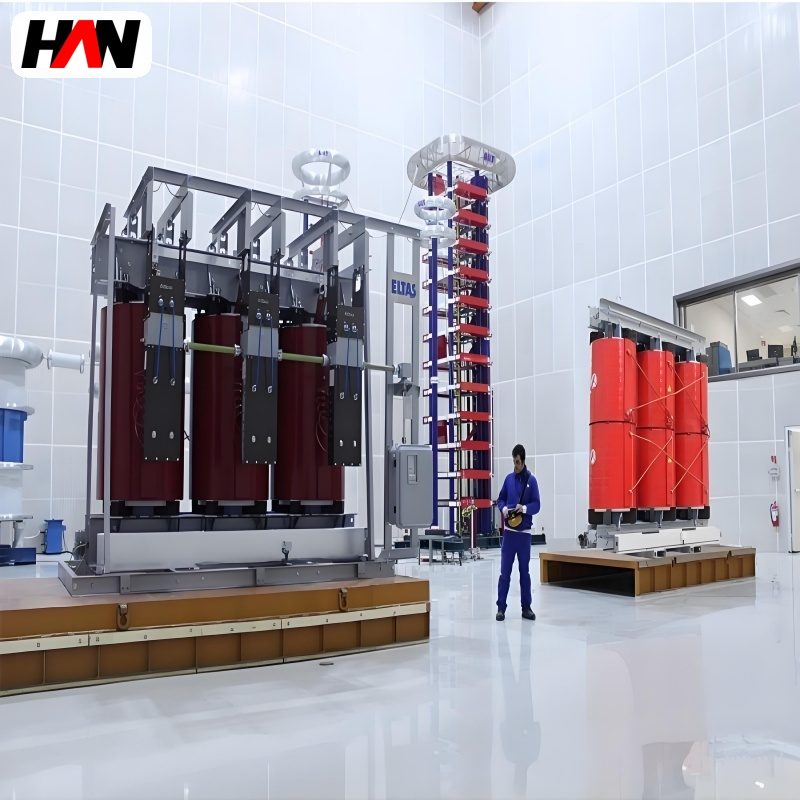
The coil of a cast resin transformer is a winding embedded in epoxy. The resin is poured under vacuum so that no voids remain between conductor and insulation, because a void is where partial discharge starts and where the insulation eventually fails. Everything else in the design follows from that: the winding has to be dried and cast in one operation, the resin has to be formulated for the thermal expansion of copper, and the finished coil cannot be repaired the way an oil-immersed winding can. Partial discharge testing at the works is therefore not a formality; it is the only evidence that the casting is sound.
Heat leaves a dry-type unit by conduction through the resin to the surface and then by convection into the room air. There is no oil circulation to carry heat from the middle of the winding to a radiator, which is why the temperature rise is limited to 100 K and why the winding hot-spot is monitored rather than guessed. F class insulation is rated for a 155 class temperature, so a 100 K rise leaves margin above the rated ambient; that margin is what absorbs a hot afternoon in a room beside a furnace, a blocked air filter and a short overload. It is not a licence for continuous operation above the nameplate.
The practical consequence is that dry-type units are less forgiving than oil units under overload and under dust. Forced air cooling can raise the rating for a limited period, but only while the fans run and the air path is clear. In a melt shop the enemy is metallic dust from charging and tapping, which is conductive and which settles on the coil surfaces and in the air ducts. An enclosure of IP20 or higher is the minimum indoors, plus a scheduled clean-down; a unit installed open at IP00 in a dusty room will track across the coil surface long before it reaches its thermal limit.
Engineering notes
1. A dry-type unit needs air, not just space: the room must have an inlet and an outlet sized for the losses at the highest ambient of the year.
2. Forced air cooling adds capacity only while the fans and the filters are healthy, so the fan failure signal belongs in the protection scheme, not only on a lamp.
3. Earthing of the enclosure, the core and the inter-winding screens is part of the installation; a cast resin coil cannot be inspected for a loose internal connection after the fact.
Key Advantages
- No fire load: there is no insulating liquid to ignite or to spread, so the unit can sit in a furnace-side electrical room, a cellar or a room under the casting floor without a dedicated fire compartment.
- No oil maintenance: no oil sampling, no leak repair, no conservator and no gas relay; the maintenance list is inspection, cleaning and a check of the fan and temperature devices.
- F class margin at 100 K rise: the difference between the insulation class and the specified rise is the reserve that covers high ambient, dust and short overload.
- Short-time boost with forced air: fans raise the usable capacity for the peak hours of a casting sequence, without changing the continuous rating.
- Enclosure from IP20 to IP54: the same core and coil can be fitted for a clean electrical room or for a dusty platform, with the air path designed for the actual dirt load rather than assumed.
Selection and Commissioning
- Fix the ambient before the rating. A dry-type unit is rated at a stated ambient; a room beside a furnace is not the same as a clean substation, and the rating has to be adjusted for the temperature the room actually reaches in summer.
- Check the air path. Louvres, inlet area, outlet height and the position of the unit relative to the wall decide whether convection works; a unit pushed into a corner will run hot at half load.
- Decide the enclosure with the dust load. IP20 indoors as a minimum, IP54 for a yard or a very dusty platform, and a filter regime that can actually be followed by the maintenance team.
- Set the temperature devices. Winding temperature alarms and trips come from the embedded sensors; they should act on the upstream breaker and, where relevant, on the process interlock.
- Plan the earthing and the screens. Core, enclosure, screens and the neutral arrangement are agreed on the drawing, because none of them can be added after the coils are cast.
- Commission with a load run and a thermal image. After the first loaded hours, scan the coil surfaces and the connections; a hot joint at a cable lug looks exactly like a winding problem until it is photographed.
Frequently Asked Questions
Q1: Can a dry-type transformer be installed close to the furnace?
A: Yes, and that is its main advantage, but close means an electrical room with its own ventilation, not the platform itself. Radiant heat, dust and moisture all reach further than the visible flame, so the room is located and ventilated for the ambient it will see, and the unit is derated if that ambient is above the rated value.
Q2: How much ambient temperature can F class insulation take?
A: The class is defined by the hottest spot the insulation system tolerates, and the 100 K rise is measured against the rated ambient. Every degree of extra ambient eats into the margin between the two. That margin is generous enough for a hot melt shop room, but it shrinks quickly if the air path is blocked or the fans have failed.
Q3: Why is the overload capability lower than an oil-immersed unit?
A: Oil carries heat out of the winding by circulation and stores it in a large thermal mass, so a short overload raises the oil temperature slowly. In a dry unit the heat has to cross the resin and leave from the surface, and the winding has nowhere to put it. The result is a faster hot-spot rise and a shorter permissible overload.
Q4: What maintenance does it need?
A: Cleaning is the main item. Coil surfaces and air ducts are vacuumed or blown dry at an interval set by the dust in the room, filters are replaced, fans are checked for bearing noise, and the temperature and protection devices are tested. There is no oil to sample and no gasket to leak, but the coil cannot be opened for inspection either.
Choose an Oil-Free Unit for the Melt Shop
Send the load list, the room ambient and the dust conditions, and HANI Metallurgy will return a rating, a cooling scheme and an enclosure class for your installation.