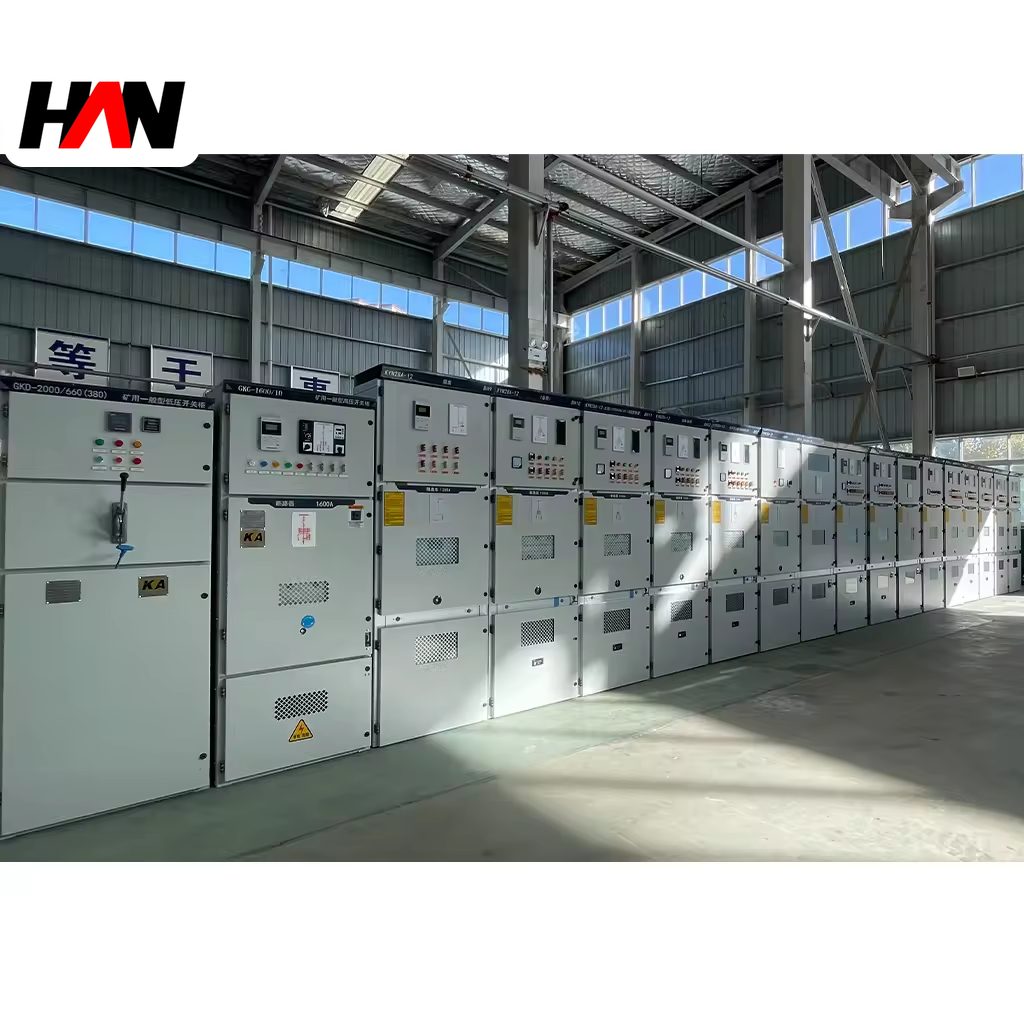
Description
MNS Modular Withdrawable Switchgear
High-current LV distribution for large melt shops
Overview
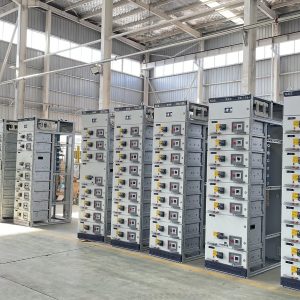
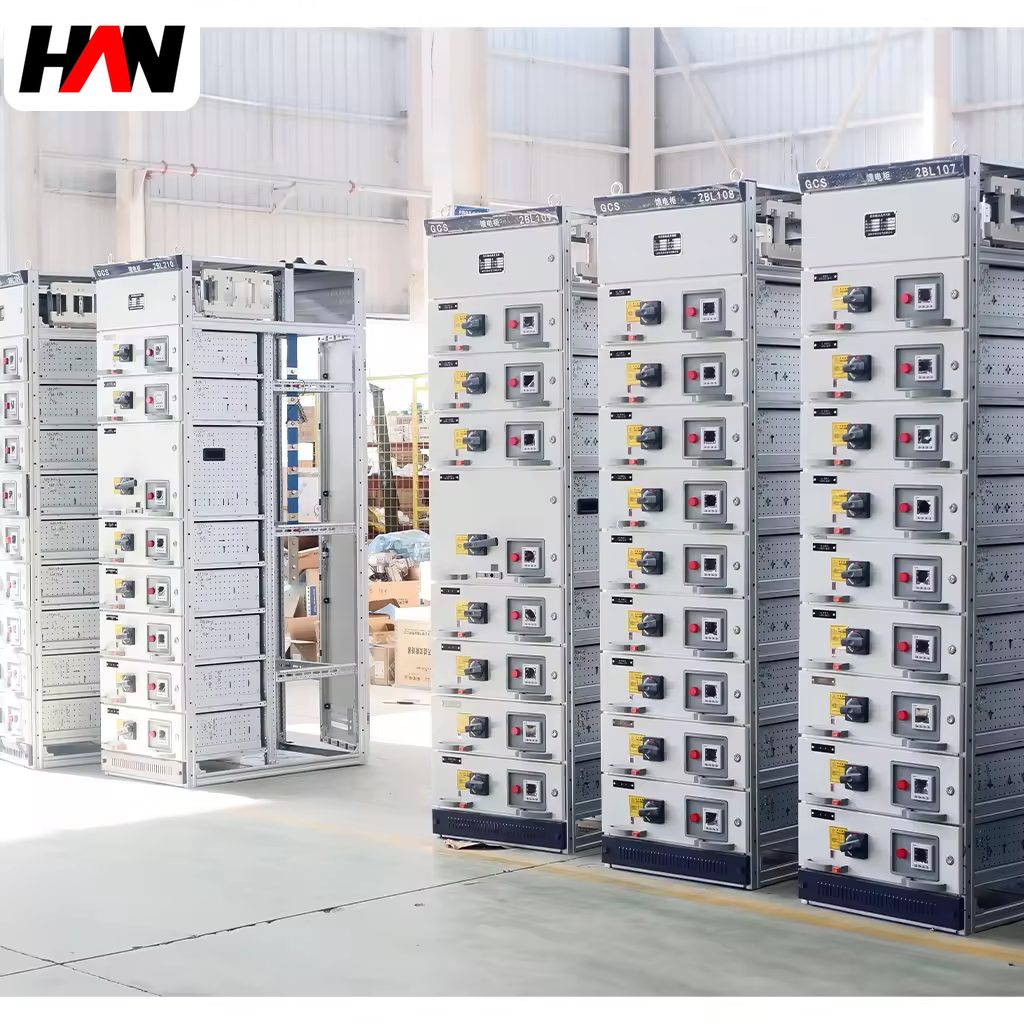
This is the main low-voltage distribution assembly of a large melt shop: the board that takes power from the furnace or auxiliary transformers and splits it into the feeders that supply the motor control centres, the caster boards, the dedusting substations and the workshop distribution. Busbar current reaches 6300 A at 400 V or 690 V, short-time withstand reaches 100 kA, and the whole lineup is built on a 25 mm module grid so that every functional unit, from a small feeder to a 6300 A incomer, is a multiple of one 8E module. It is the level where current, fault level and future expansion all peak at the same time, and the structure has to answer for all three.
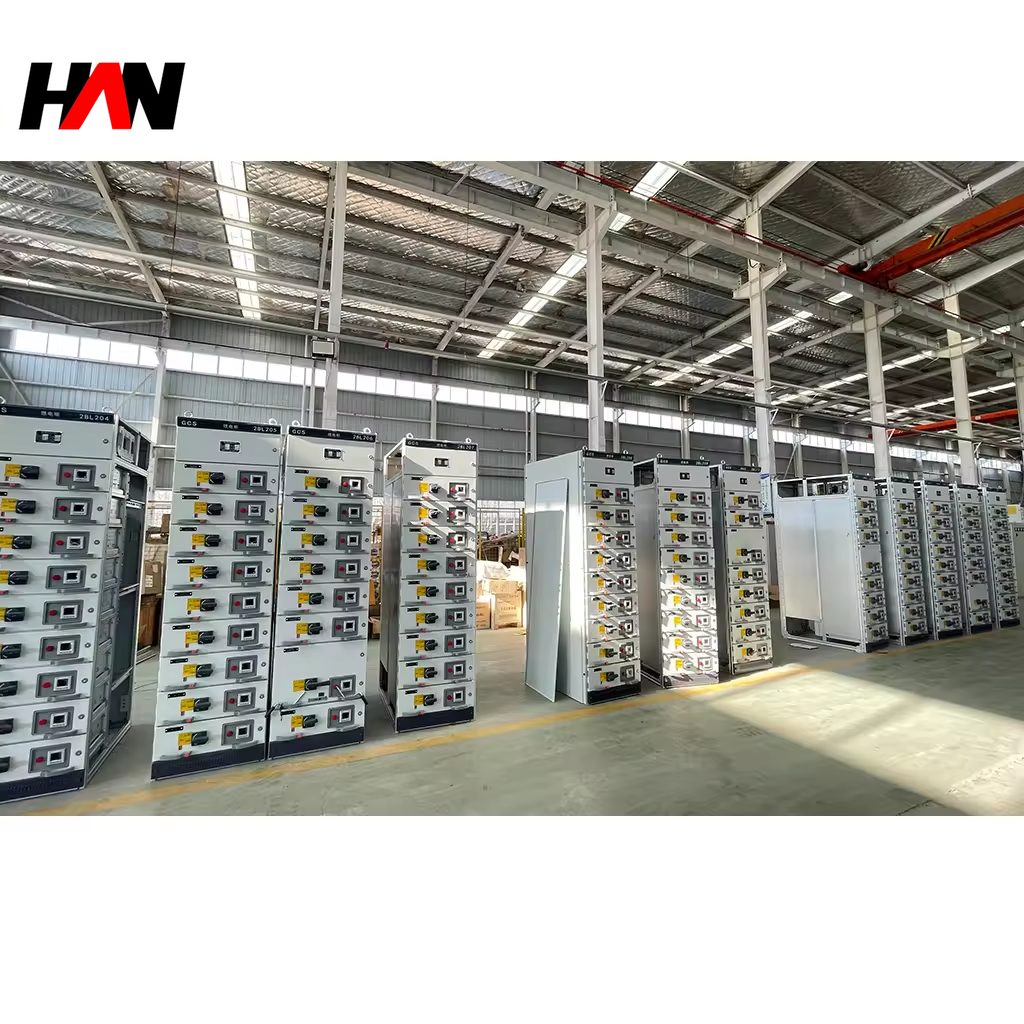
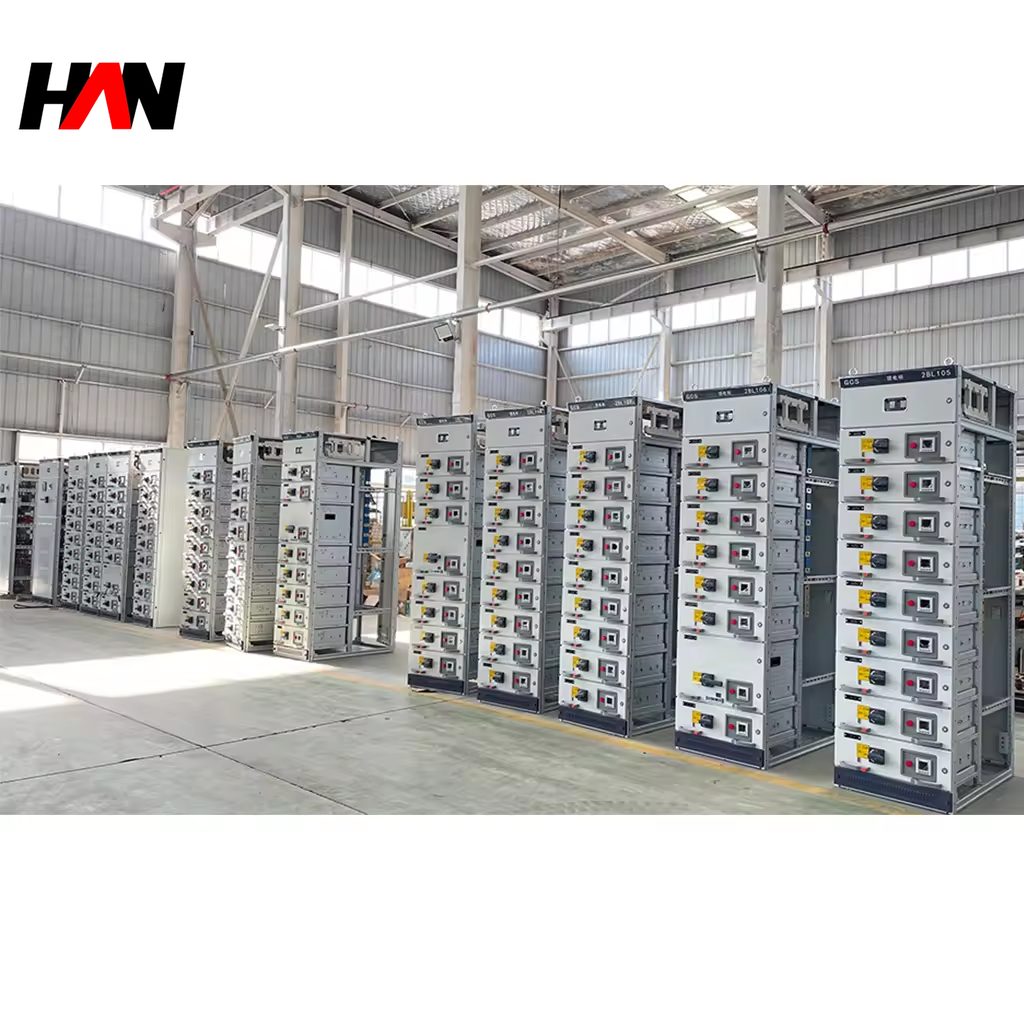
A board of this size is not bought for one project only. It is bought for the next ten years of modifications: a new dedusting fan, a second caster, an added compensation section. That is why the modular construction earns its cost. Sections are joined by a bolted busbar extension, the module grid lets a spare 8E slot become a working feeder without cutting steel, and withdrawable units let a device be replaced without dismantling the section. HANI Metallurgy builds these lineups as the head of the low-voltage distribution chain, downstream of the furnace transformer and upstream of the motor control centres.
Technical Parameters
| Parameter | Unit | 2000 A | 4000 A | 6300 A |
|---|---|---|---|---|
| Busbar rated current | A | 2000 | 4000 | 6300 |
| Rated operational voltage | V | 400 / 690 | ||
| Short-time withstand current Icw | kA / 1 s | 65 | 80 | 100 |
| Peak withstand current Ipk | kA | 143 | 176 | 220 |
| Module grid | E | 8E, 25 mm step | ||
| Form of separation | — | Form 4b | ||
| Protection degree | — | IP31 to IP54 | ||
| Arrangement | — | Single-front or double-front | ||
| Busbar system | — | Copper, multiple bars per phase | ||
| Design standard | — | IEC 61439-2 | ||
Typical values for reference. Final ratings, module allocation and arrangement are fixed on the nameplate and the approved project datasheet.
How It Works Under Furnace Duty
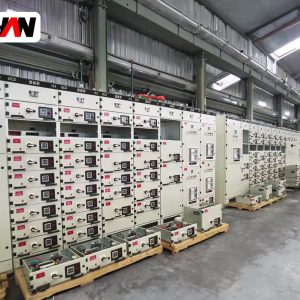
Everything starts from the module. The usable height of a section is divided into 8E units of 200 mm, and the division runs on a 25 mm step so that a section can be filled without waste. A small outgoing feeder takes one 8E unit, a large moulded case feeder takes 16E, and an incomer or a tie takes its own compartment at the end or the top of the section. Because every dimension is a multiple of the grid, a spare module is a real asset: it can take a future feeder, a measuring unit or a control interface without modifying the section. The drawer mechanism is a crank-operated spindle with three positions, and the unit is racked in and out with the door closed, which keeps the operator away from the live compartment.
At 6300 A the busbar stops being a bar and becomes a system. Each phase is built from several copper bars in parallel, spaced to let air circulate between them, with the phase order arranged to cancel part of the stray field around the run. The electromagnetic force at the 220 kA peak is enormous, so the supports are placed at close intervals and the bars are clamped rather than merely bolted. That is also why the short-time rating and the peak rating are quoted separately: the first is a thermal limit that decides the bar cross-section, the second is a mechanical limit that decides the support spacing. A board that fails on a fault usually fails mechanically, not by melting.
Heat sets the practical limit on the whole lineup. The losses of a 6300 A busbar, an air circuit breaker and a row of feeders are concentrated in a steel enclosure standing in a room that is already warm, and IEC 61439-2 verifies the assembly by temperature rise at a stated ambient. Above that ambient the incoming current is derated, or the enclosure is ventilated, or the arrangement is changed from single-front to double-front so that the busbar compartment gets its own airflow path. The IP rating and the heat are in direct conflict here: every filter that keeps dust out also reduces the air that carries the heat away, and the choice has to be made with both the dust load and the loss figure on the table.
Engineering notes
1. Spare modules are cheaper than spare sections. Reserve 8E units across the lineup at the design stage, not after the first expansion request.
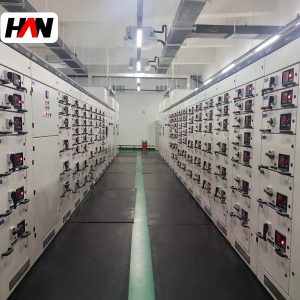
2. A double-front lineup needs a clear aisle on both sides; that is a building decision, and it cannot be recovered later.
3. Busbar extension between sections is a factory joint. It is made once, at the end of a section, and it is where the lineup will be extended.
Key Advantages
- 6300 A in one lineup: the whole low-voltage distribution of a large melt shop is concentrated in one assembly, which simplifies protection coordination and cable routing.
- True 25 mm modularity: sections, drawers and compartments are all multiples of 8E, so capacity can be planned on a drawing and delivered without special parts.
- 100 kA withstand with a matched peak: busbar supports and clamping are designed for the electromagnetic force of the peak value, which is where heavy-current boards usually fail.
- Two arrangements from one system: single-front against a wall, or double-front with a rear aisle, using the same modules and the same spares.
- Extendable at the section joint: the busbar joint is designed as a future extension point, so a second caster or a new dedusting line can be added at the end of the lineup.
Selection and Commissioning
- Start from the outgoing feeder list. Every feeder is converted into modules, and the module total sets the number and length of sections before the busbar is discussed.
- Fix the fault level at the incomer. Icw and Ipk follow the transformer and the cable run to the board; both must be confirmed for the highest value the plant can deliver.
- Choose the arrangement with the building. Double-front saves length but needs two aisles; single-front is longer and can stand against a wall.
- Decide the heat strategy. Compare the derated current with the calculated losses, then select ventilation, IP rating and bar size together rather than one at a time.
- Reserve capacity deliberately. Spare modules, spare section length and a defined extension point are cheaper than a rebuild, and they belong in the drawing.
- Commission in stages. Insulation and torque checks per section, busbar temperature survey under load, protection primary injection, then a functional test of every interlock before energising the plant.
Frequently Asked Questions
Q1: What is the difference between this system and a GCK board?
A: The grid and the busbar. This system uses a 25 mm step with a uniform 8E module across the lineup and is built up to 6300 A, while a GCK board is a lighter modular assembly aimed at motor control duties at lower current. Above roughly a few thousand amperes the heavier structure and the double-front option of this system are what make the difference.
Q2: How is a 6300 A busbar kept within its temperature limit?
A: By using several bars per phase with air gaps, by clamping them at close intervals, by keeping the run to the feeders short, and by giving the busbar compartment its own ventilation path. Where the room cannot be cooled, the board is ordered with a larger bar and operated at a derated current.
Q3: Can the lineup be maintained from both sides?
A: Yes, in the double-front arrangement, where cable termination and device access are separated and an aisle is needed at the rear. Single-front units are operated and maintained from the front only, which is the usual choice when floor space is limited.
Q4: Does an extension require a shutdown?
A: Joining a new section to the busbar does. The joint is made at the end of the lineup with the busbar de-energised, so the practical approach is to leave a spare section or a prepared joint and schedule the work for a planned stop.
One Lineup for the Whole Low-Voltage Load
Send the feeder list, the fault level and the room dimensions, and HANI Metallurgy will return a module allocation, an arrangement drawing and a thermal assessment.